Miradouro de Santa Luzia
Tiled viewpoint terrace in Alfama
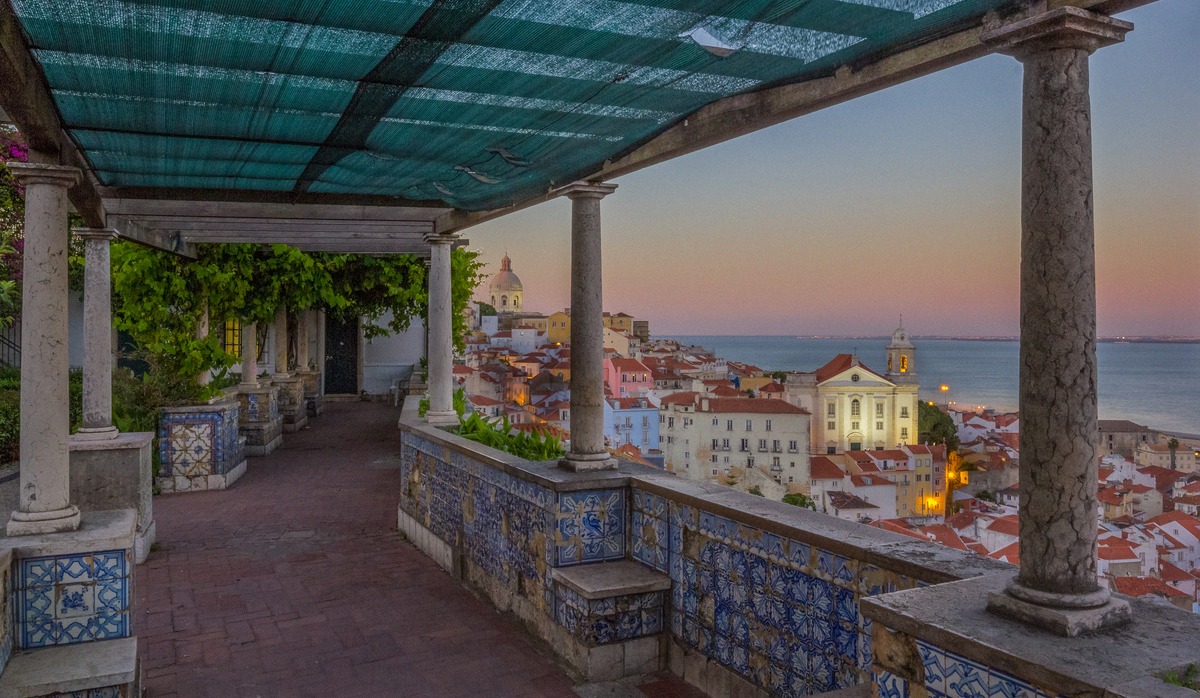
The Miradouro de Santa Luzia is Alfama's famous viewpoint terrace with a pergola, azulejos and a postcard view over the red rooftops to the Tagus. Free to visit, on the Tram 28 route.
Contents
A postcard view over Alfama
The Miradouro de Santa Luzia is one of Lisbon's best-known viewpoints and the archetypal Alfama scene: under a wooden pergola draped in climbing plants, you look out over a jumble of red tile roofs down to the Tagus. Above the rooftops several landmarks stand out, the dome of Santa Engrácia (the National Pantheon), the church of Santo Estêvão and the two white towers of São Miguel. The terrace sits atop the former Cerca Moura, the Moorish city wall that once encircled São Jorge Castle.
The azulejos and the garden
What sets Santa Luzia apart from Lisbon's other viewpoints is the azulejos, the painted tiles, on the south wall of the church of the same name. The two large blue-and-white tile panels are the work of António Quaresma (Fábrica da Viúva Lamego) and were restored in 2015. One shows the Terreiro do Paço, today's Praça do Comércio, before the 1755 earthquake, the other the Christian conquest of Lisbon in 1147 and the siege of the castle.
Right next to it sits the small Jardim Júlio de Castilho (also known as Jardim de Santa Luzia), named after the writer and Lisbon historian Júlio de Castilho. The garden has a bust, a small pond and a few shaded benches. The church of Santa Luzia e São Brás on the square is the national seat of the Portuguese assembly of the Order of Malta.
What to expect
The miradouro has a covered terrace under the vine-draped pergola plus an esplanade with a kiosk and terrace bar, unlike the nearby, sparer Miradouro da Senhora do Monte, here you can settle in with a coffee or a glass of wine. The bar is on two levels: the upper part occupies the church's former cloister near the old city wall, with the restaurant area below. There are no fixed, officially confirmed opening hours or prices for the bar, so don't count on them.
The square is popular and gets crowded accordingly. It's quiet in the early morning; by late afternoon and sunset the light is at its best, but that's also when most visitors and tram passengers converge. Allow 20 to 40 minutes, longer if you stop for a drink at the bar.
Visiting & practicalities
Access is free and the square is a public, open-access viewpoint run by the city, no fixed closing times are published. You only pay for whatever you have at the kiosk or the terrace bar.
The easiest way there is Tram 28, which stops right at the miradouro. On foot, the route runs through the steep, cobbled lanes of Alfama, sturdy shoes are worth it, and the district as a whole is demanding for anyone with limited mobility. There's no designated parking in narrow Alfama, so the tram is clearly the more practical option.
The visit combines well with a short walk: just a few steps further on is the Miradouro das Portas do Sol, with another panorama, and from there it's a few minutes uphill to São Jorge Castle. For more on Lisbon's viewpoint terraces, see the overview Lisbon's best miradouros.
Frequently asked questions
How much does the Miradouro de Santa Luzia cost?+
How do you get to the Miradouro de Santa Luzia?+
What do the azulejos on the church wall show?+
Which viewpoint is nearby?+
Nearby
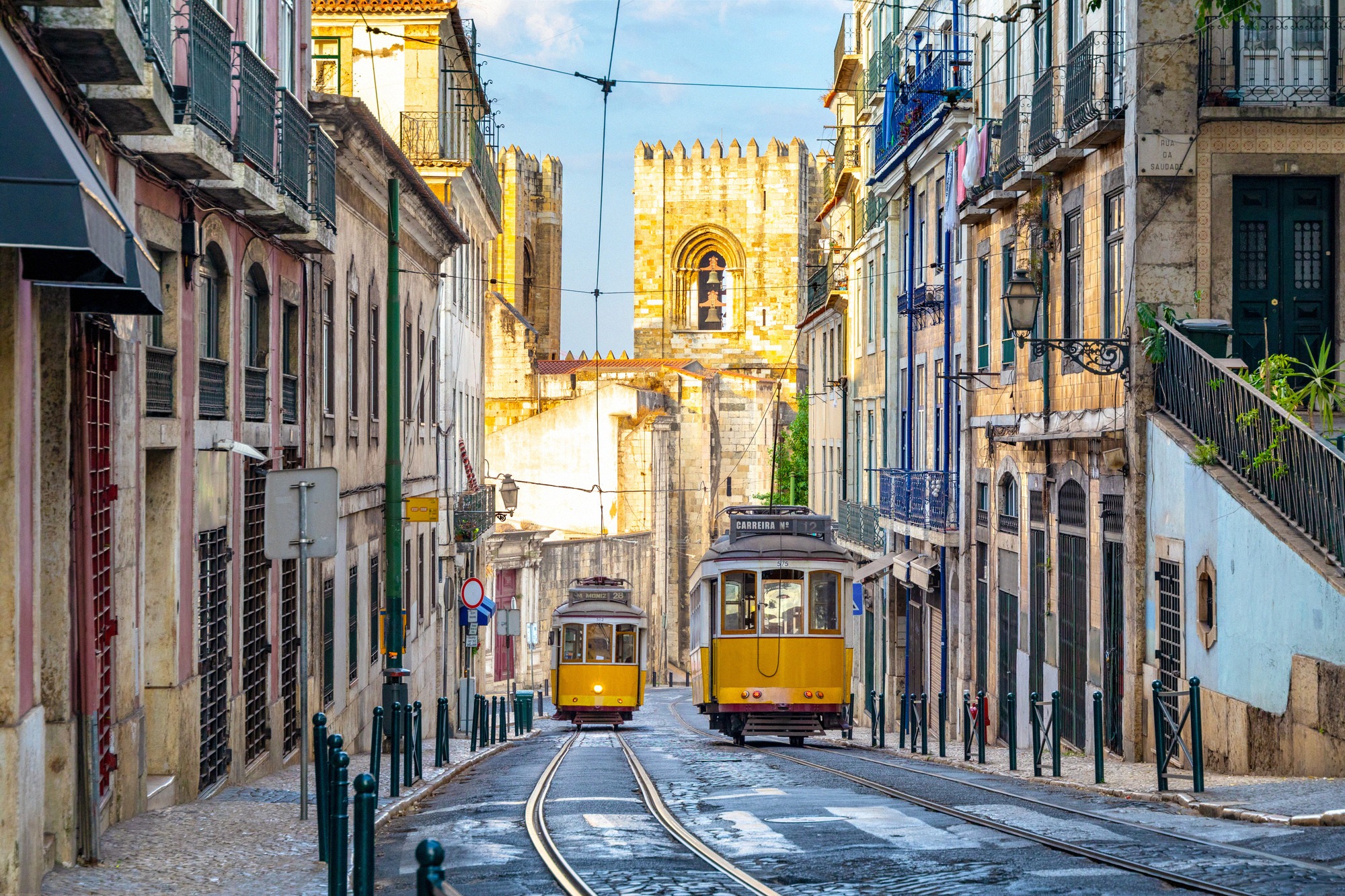
Tram 28
The yellow Carris Line 28E climbs through Graça, Alfama and Estrela, a sightseeing ride at public transport prices, from Martim Moniz to Campo de Ourique.
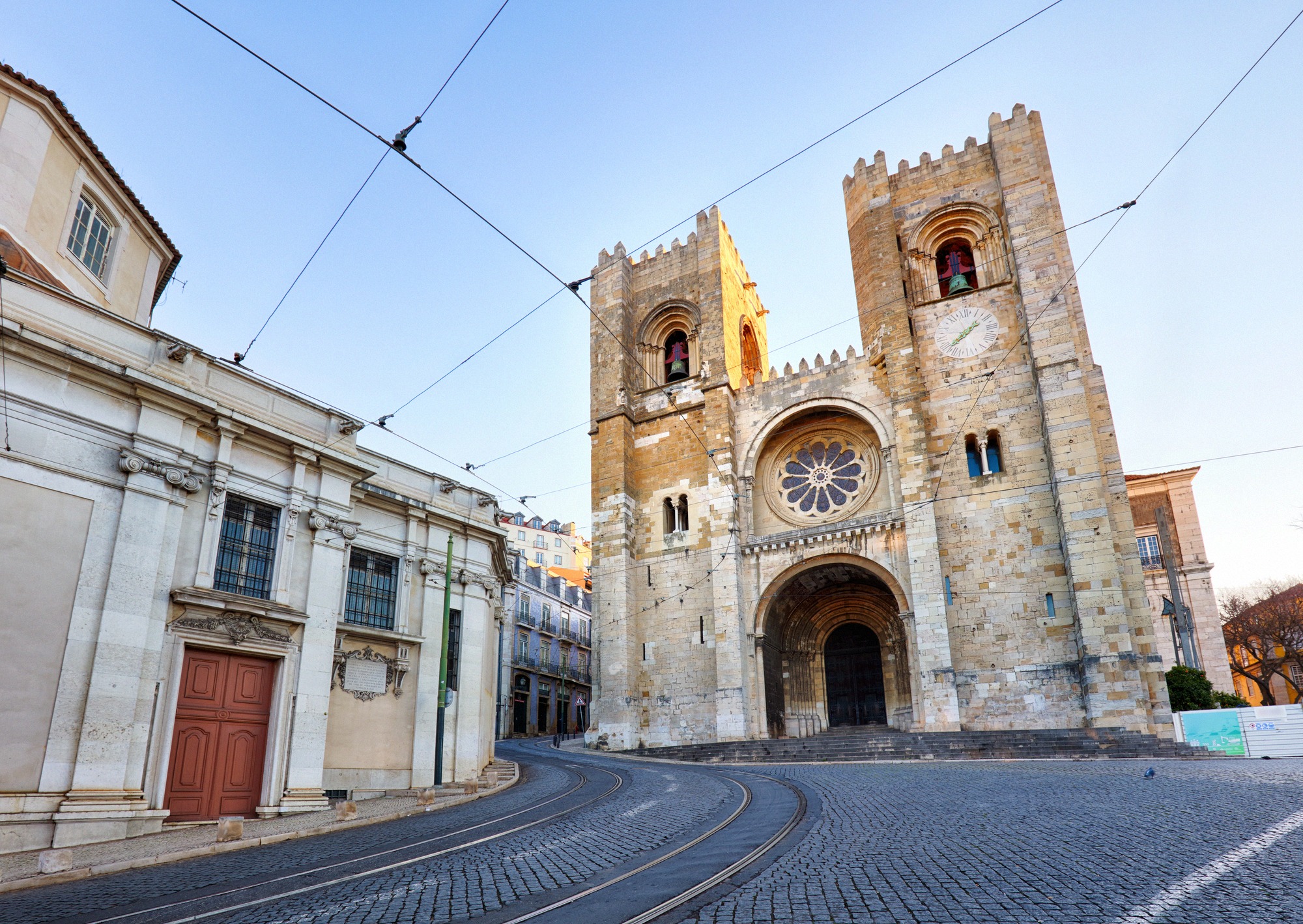
Lisbon Cathedral (Sé)
Lisbon's oldest church, from 1147, a fortress-like Romanesque cathedral with twin towers, a Gothic ambulatory and treasury, and the yellow Tram 28 outside.
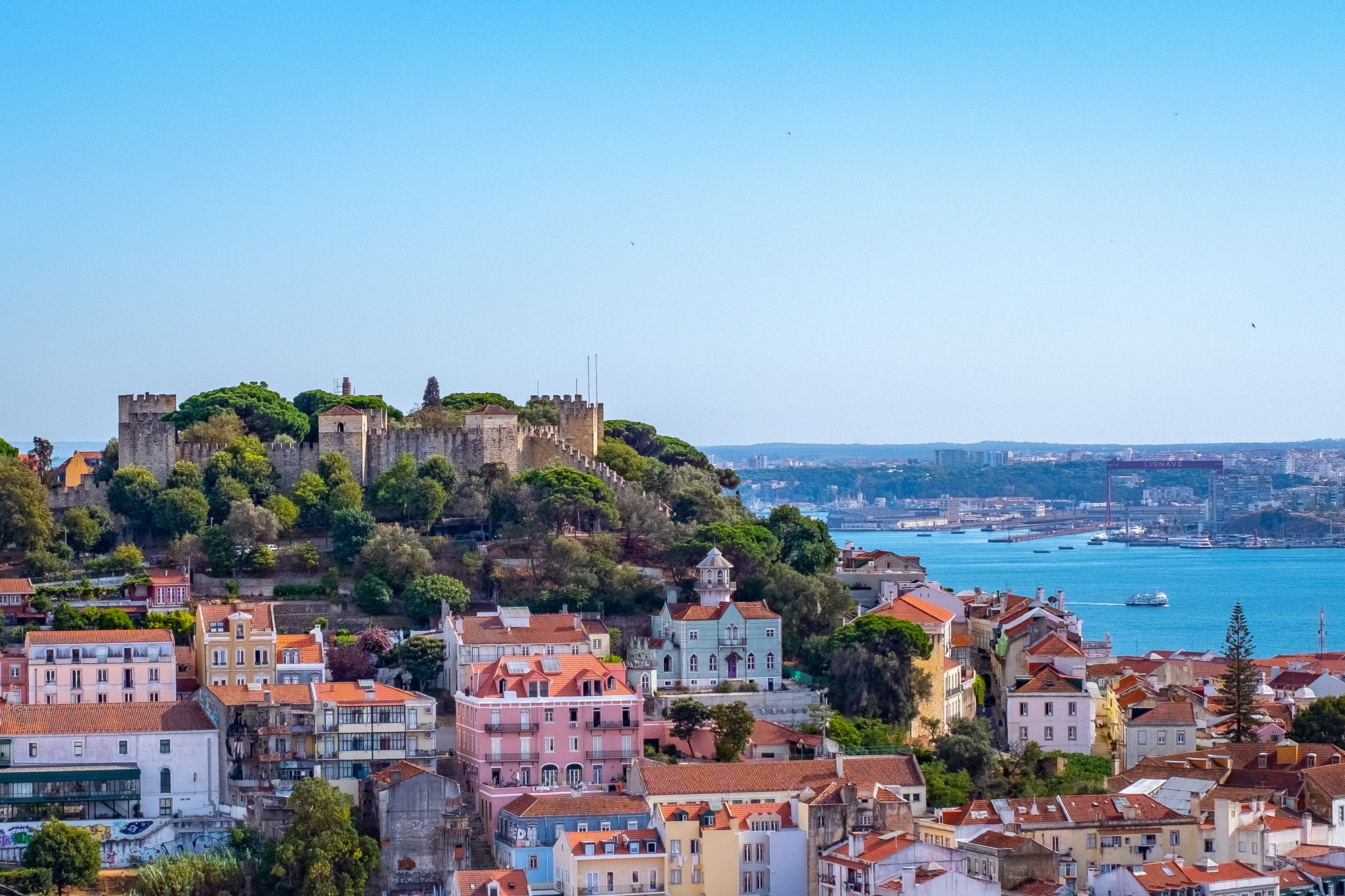
São Jorge Castle
The Moorish fortress crowns Lisbon's highest hill, with walkable ramparts, peacocks in the courtyard and the best all-round view over the old town and the Tagus.
Miradouro da Graça
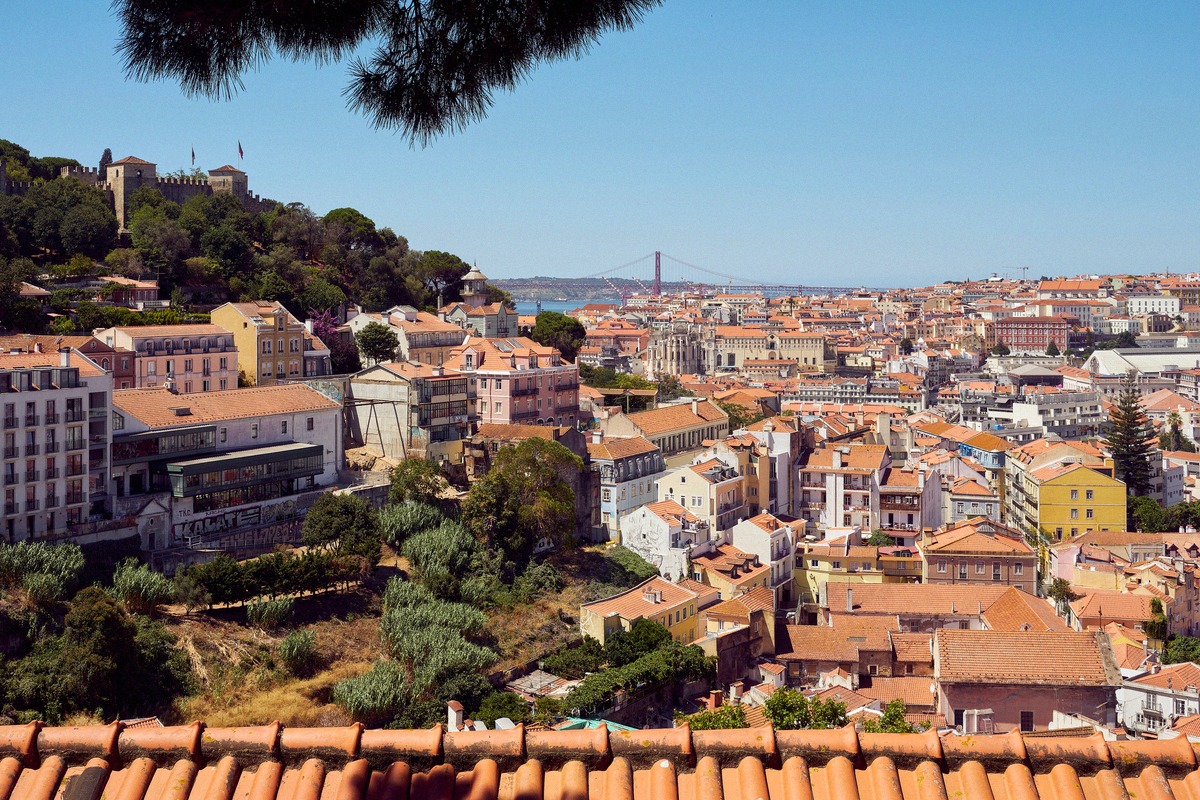
Officially the Miradouro Sophia de Mello Breyner Andresen: a wide square shaded by umbrella pines above Mouraria, with views of the castle and the Tagus.
Panteão Nacional
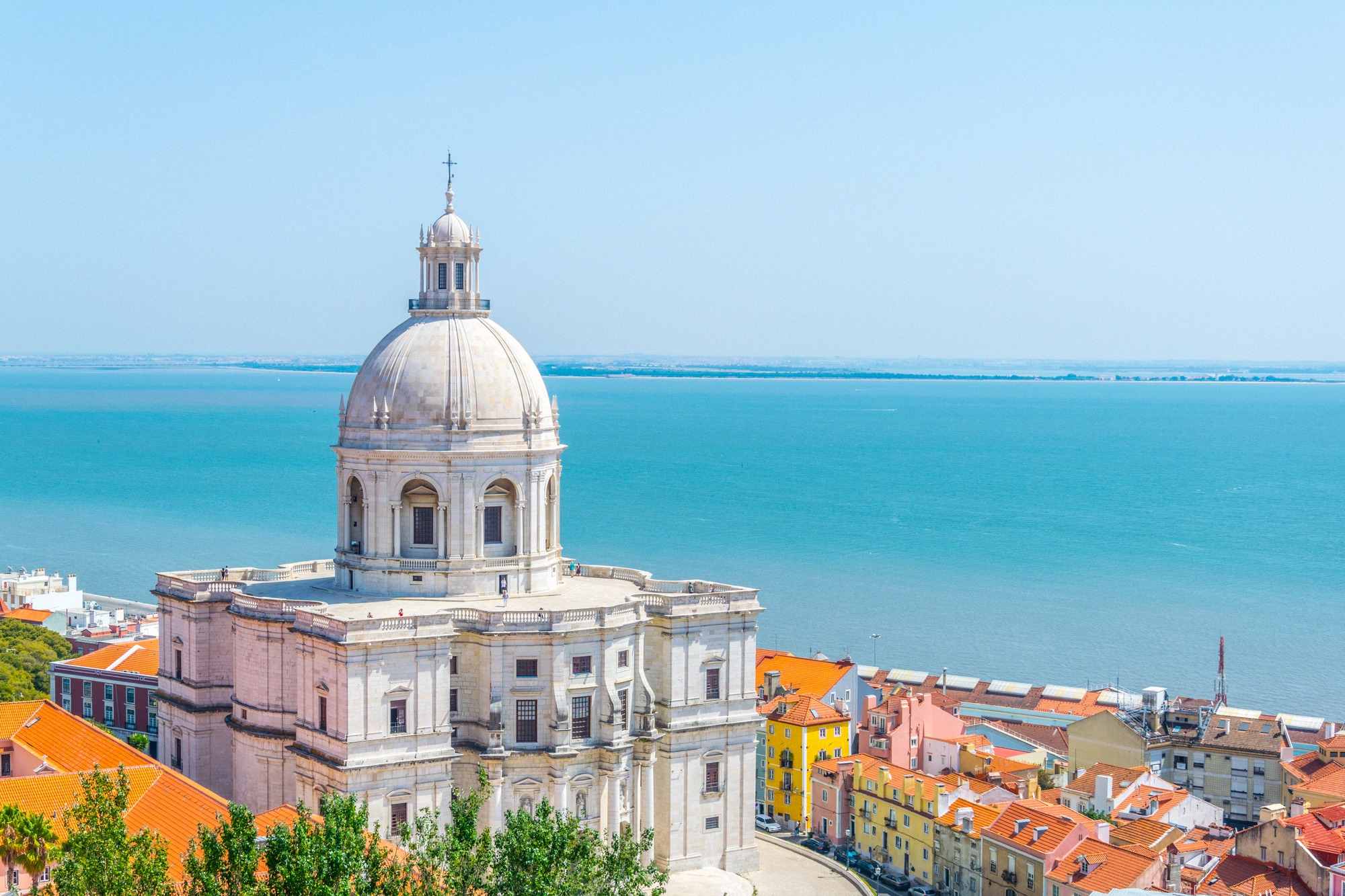
Baroque domed church in Alfama and resting place of great Portuguese figures, from Amália Rodrigues to Eusébio. With a rooftop terrace over the rooftops and the Tagus.
Rua Augusta Arch
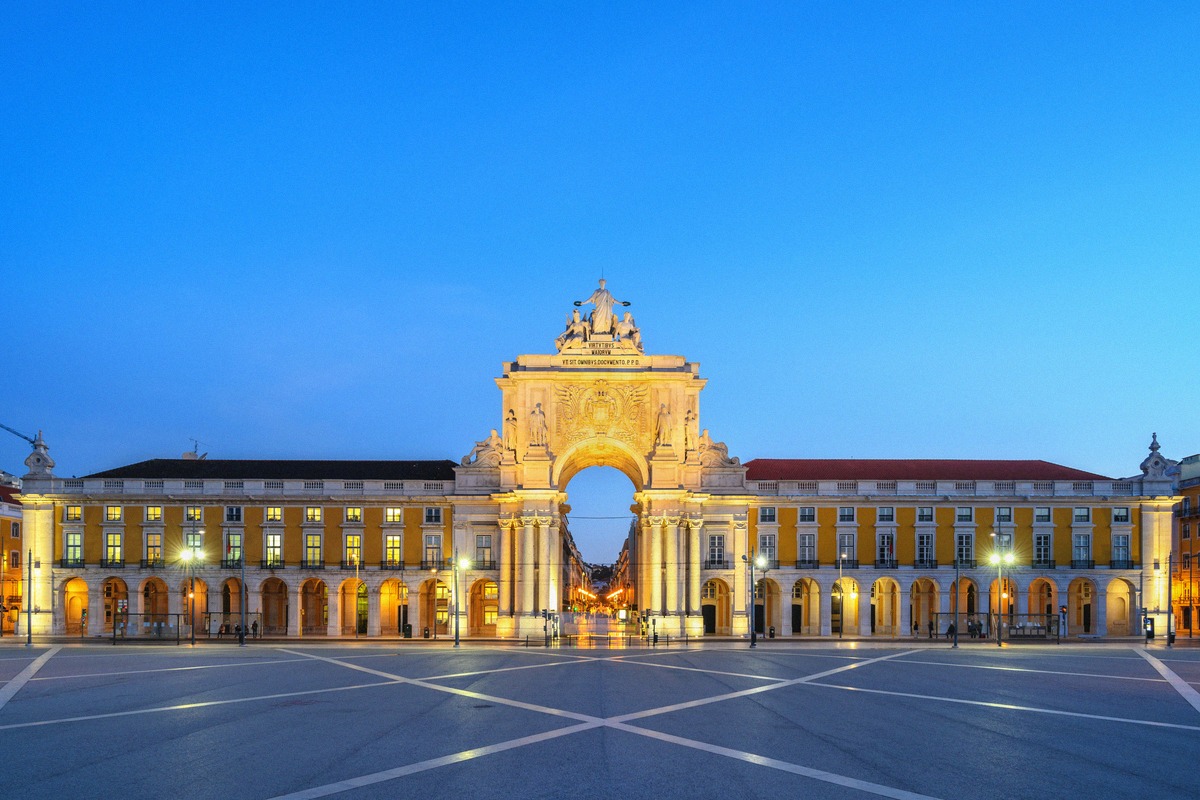
The monumental triumphal arch links Praça do Comércio with Rua Augusta. A viewing terrace up top looks over the Baixa and the Tagus; the archway below is free to walk through.