Tram 28
Historic tram through the old town
The yellow Carris Line 28E climbs through Graça, Alfama and Estrela, a sightseeing ride at public transport prices, from Martim Moniz to Campo de Ourique.

Contents
Lisbon's rolling landmark
Tram 28 is the city's most famous tram line, run by the municipal transport operator Carris. It's worked by the historic Remodelado cars (series 541-585), rebuilt in 1995/96 from wooden trams dating back to the 1930s and 40s. At just over 8 metres long with room for around 58 passengers, only 20 of them seated, these small, agile yellow cars can squeeze through narrow, steep lanes that modern trams can no longer manage. The ride is moving sightseeing at a public-transport fare.
The route from Martim Moniz to Campo de Ourique
The line connects Martim Moniz with Campo de Ourique, terminating at the Prazeres cemetery. Across around 30 stops in each direction it passes the city's highlights: up to Graça, through Alfama and past the Sé Cathedral, on through Baixa and Chiado to Estrela and its basilica. End to end, the ride takes about 40 to 45 minutes, with trams running roughly every 8 to 12 minutes at peak times.
When to ride and where to board
During the day the 28 is often hopelessly overcrowded, queues at Martim Moniz included. It's a much more pleasant ride early in the morning or late in the evening, the first tram leaves around 5:40, the last around 23:30. If you want a seat, board at the starting stop, Martim Moniz, and accept the wait; if you're flexible, hop on along the way in Graça or Estrela. For the views alone, you don't need to ride the whole route, a stretch through Alfama is enough for the experience.
Tickets and fares
There's no online pre-booking per ride. Paying the driver, the single fare is most expensive at €3.30. Get a rechargeable Navegante/Viva Viagem card from a machine or kiosk and you pay just €1.90 per ride, or €1.72 with Zapping credit. For several rides, the 24h ticket (Carris/Metro) at €7.25 is worth it; the Lisboa Card is also valid. Full fare details are in the public transport guide.
Good to know
The 28 is not wheelchair accessible: high steps, narrow doors, no room for a wheelchair or pushchair. Carris names only the 15E to Belém as an accessible tram line. The line is also a well-known hotspot for pickpockets, in the crush at popular stops, take care: keep valuables close to your body and wear backpacks on your front. If it's too crowded for you, the quieter Line 12E is an alternative, a short loop from Praça da Figueira that shares some of the same tracks and passes Portas do Sol and the cathedral in around 21 minutes.
Frequently asked questions
Where's the best place to board Tram 28?+
How much does a ride on Tram 28 cost?+
Is Tram 28 wheelchair accessible?+
Is there a quieter alternative to Tram 28?+
Nearby
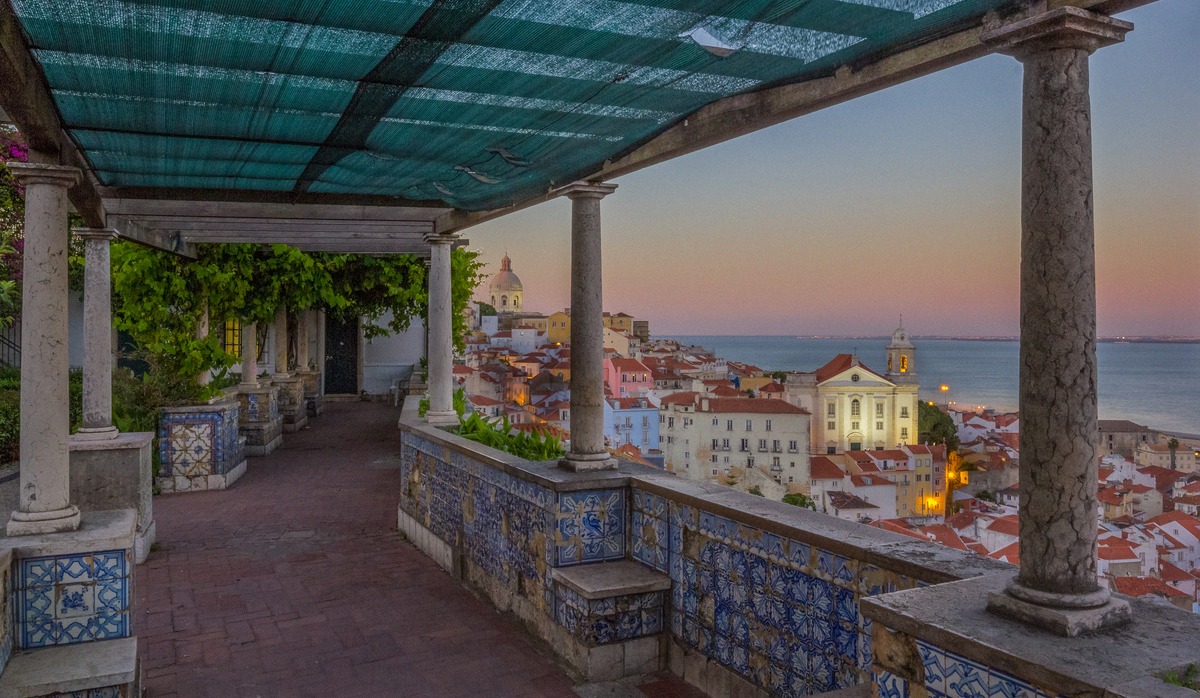
Miradouro de Santa Luzia
The Miradouro de Santa Luzia is Alfama's famous viewpoint terrace with a pergola, azulejos and a postcard view over the red rooftops to the Tagus. Free to visit, on the Tram 28 route.
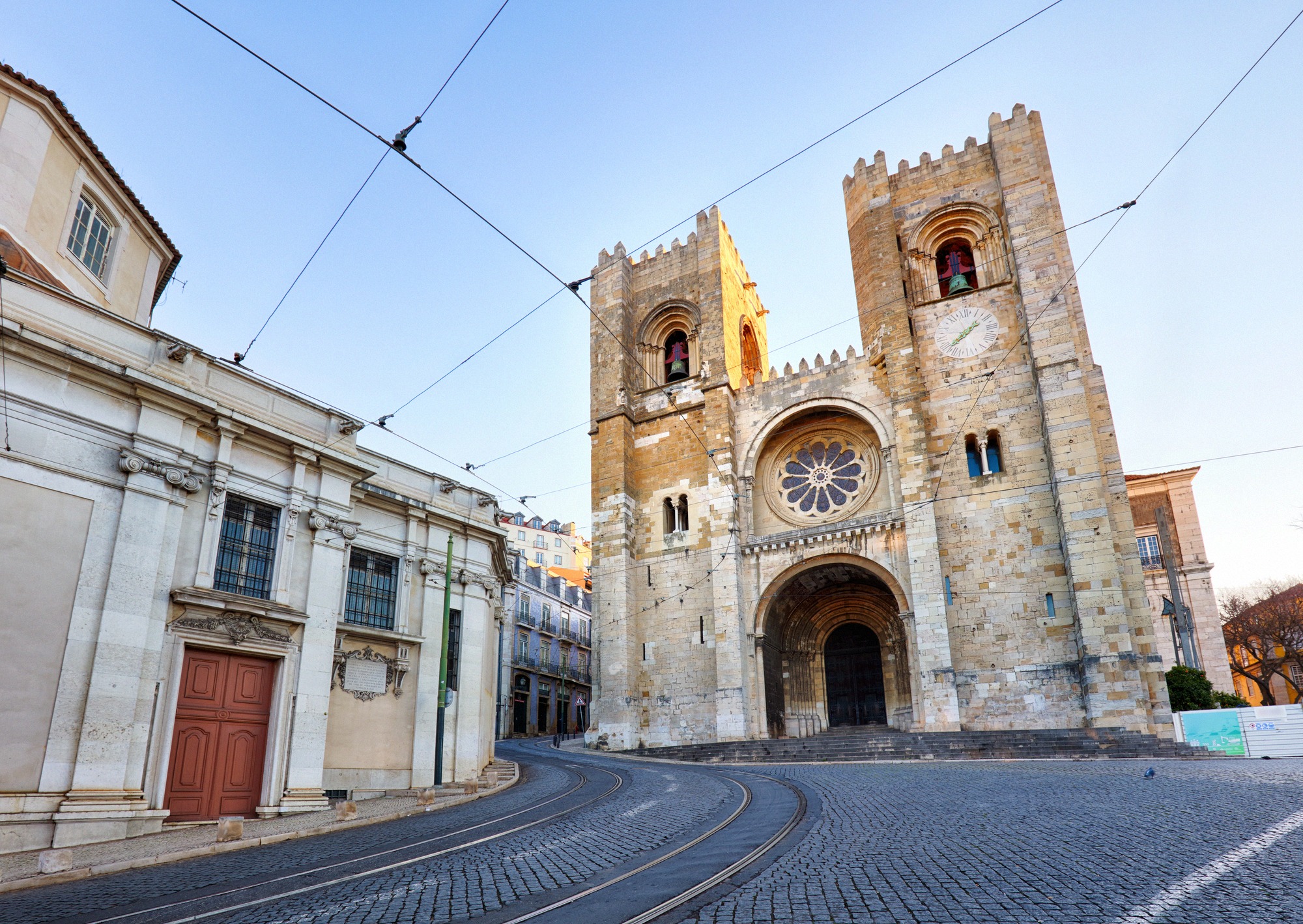
Lisbon Cathedral (Sé)
Lisbon's oldest church, from 1147, a fortress-like Romanesque cathedral with twin towers, a Gothic ambulatory and treasury, and the yellow Tram 28 outside.
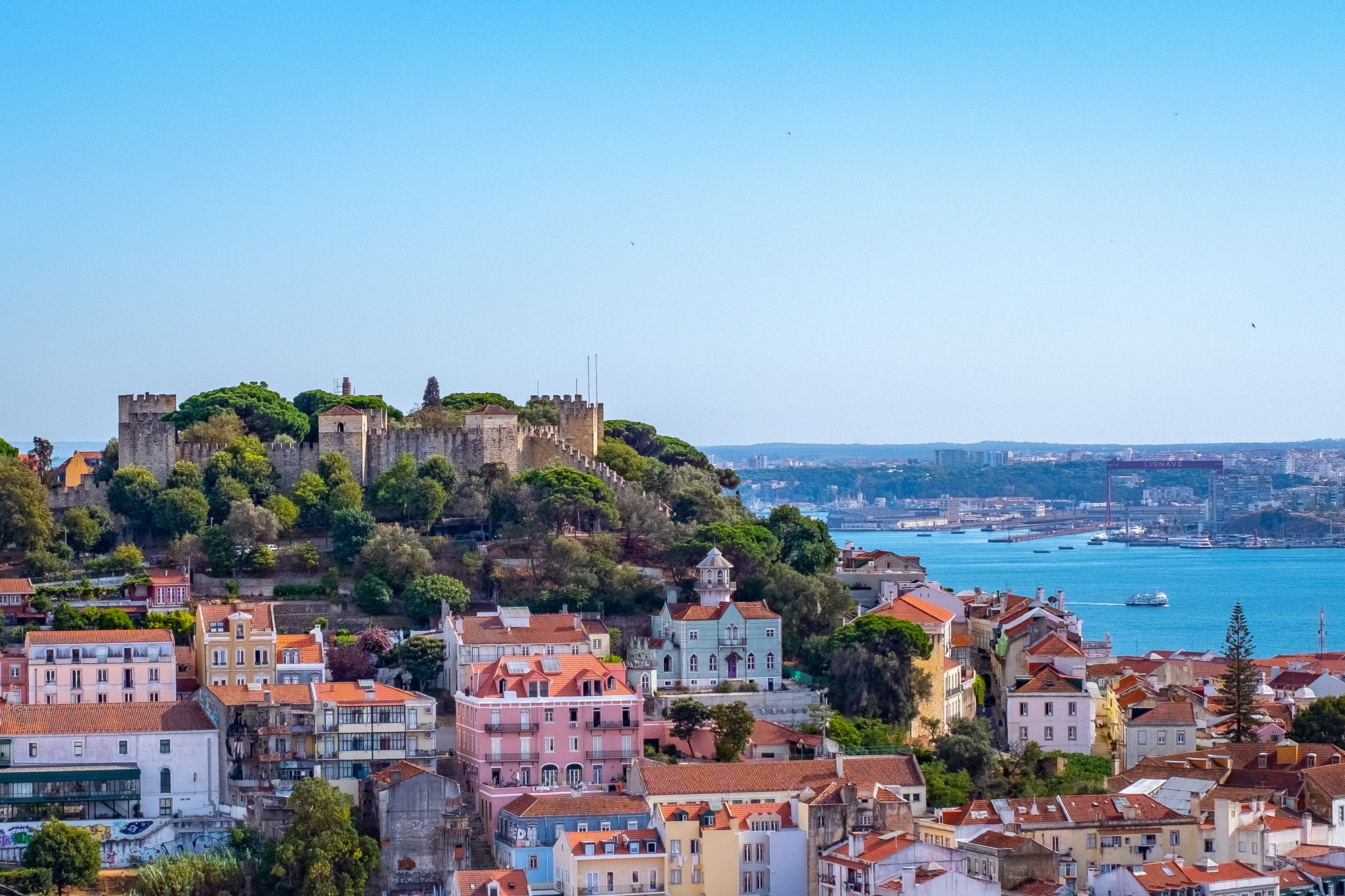
São Jorge Castle
The Moorish fortress crowns Lisbon's highest hill, with walkable ramparts, peacocks in the courtyard and the best all-round view over the old town and the Tagus.
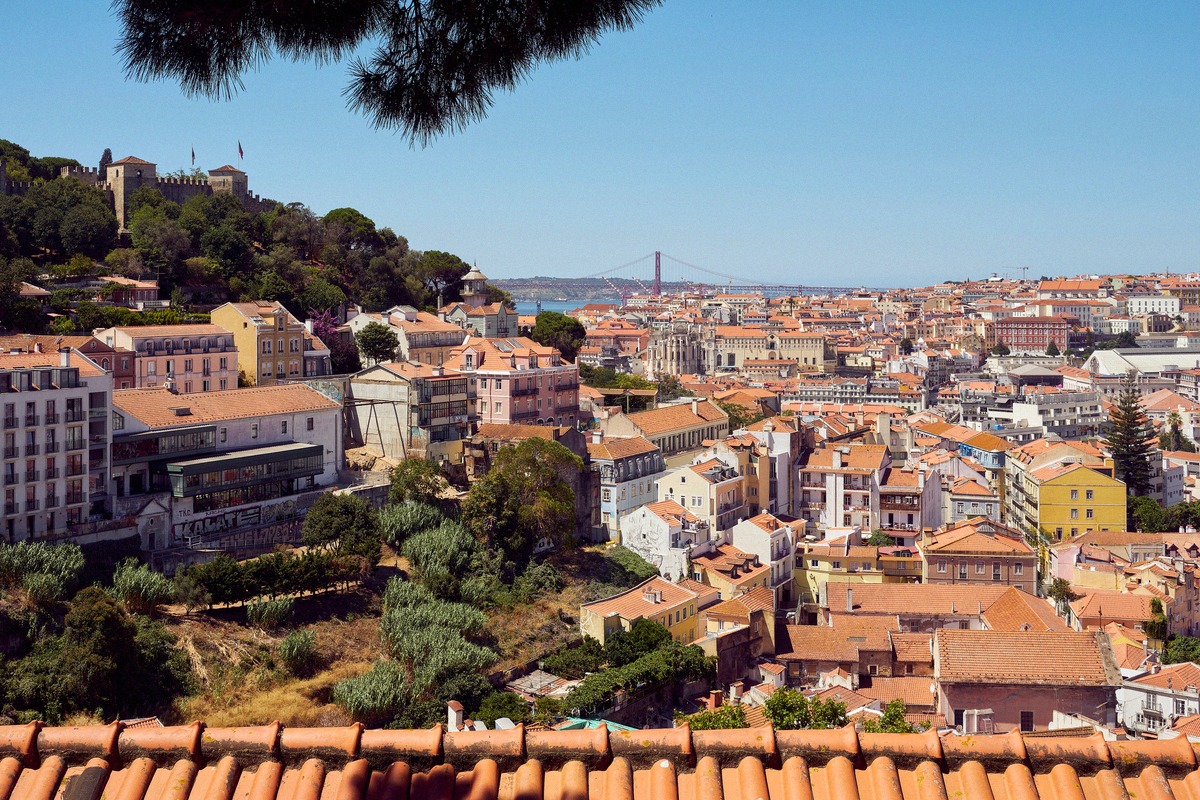
Miradouro da Graça
Officially the Miradouro Sophia de Mello Breyner Andresen: a wide square shaded by umbrella pines above Mouraria, with views of the castle and the Tagus.

Panteão Nacional
Baroque domed church in Alfama and resting place of great Portuguese figures, from Amália Rodrigues to Eusébio. With a rooftop terrace over the rooftops and the Tagus.

Rua Augusta Arch
The monumental triumphal arch links Praça do Comércio with Rua Augusta. A viewing terrace up top looks over the Baixa and the Tagus; the archway below is free to walk through.