Praça do Comércio
Grand square on the Tagus
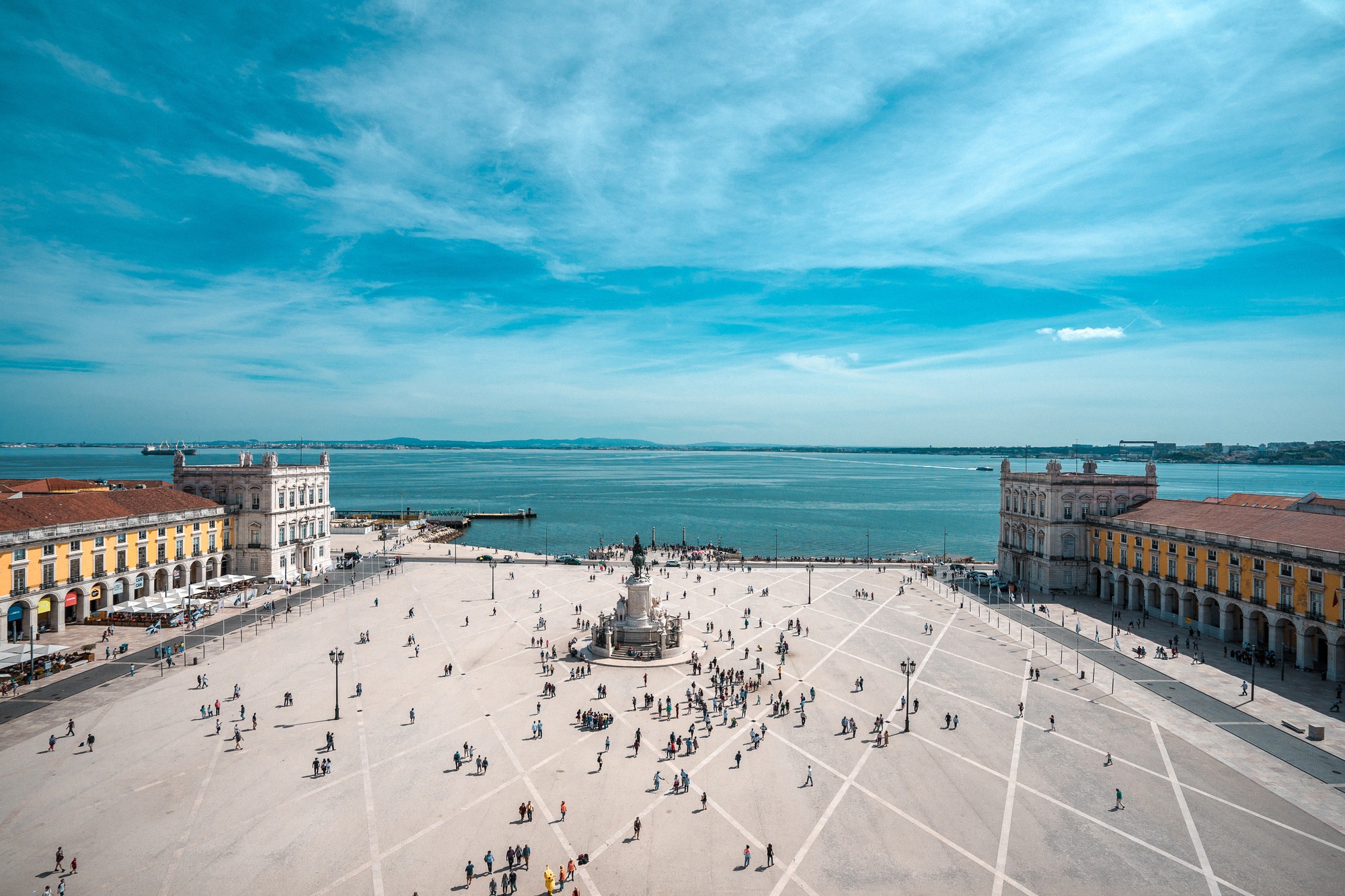
Lisbon's grand main square, open to the Tagus, with its triumphal arch and equestrian statue. The royal palace stood here until the 1755 earthquake, hence its old name, Terreiro do Paço.
Contents
Lisbon's gateway to the river
Praça do Comércio is Lisbon's largest and most impressive square, sitting right on the banks of the Tagus. Until the devastating 1755 earthquake, the royal palace (Paço da Ribeira) stood here - which is why locals still often call the square Terreiro do Paço. When the Marquês de Pombal rebuilt the city, the square was recreated as a strictly symmetrical space framed by yellow arcades: a deliberately staged gateway to the resurrected city, open on one side to the water through which trade and power once flowed into town.
The square is a freely accessible public space, no admission, no opening hours. You can walk in and cross it any time, day or night.
What to expect
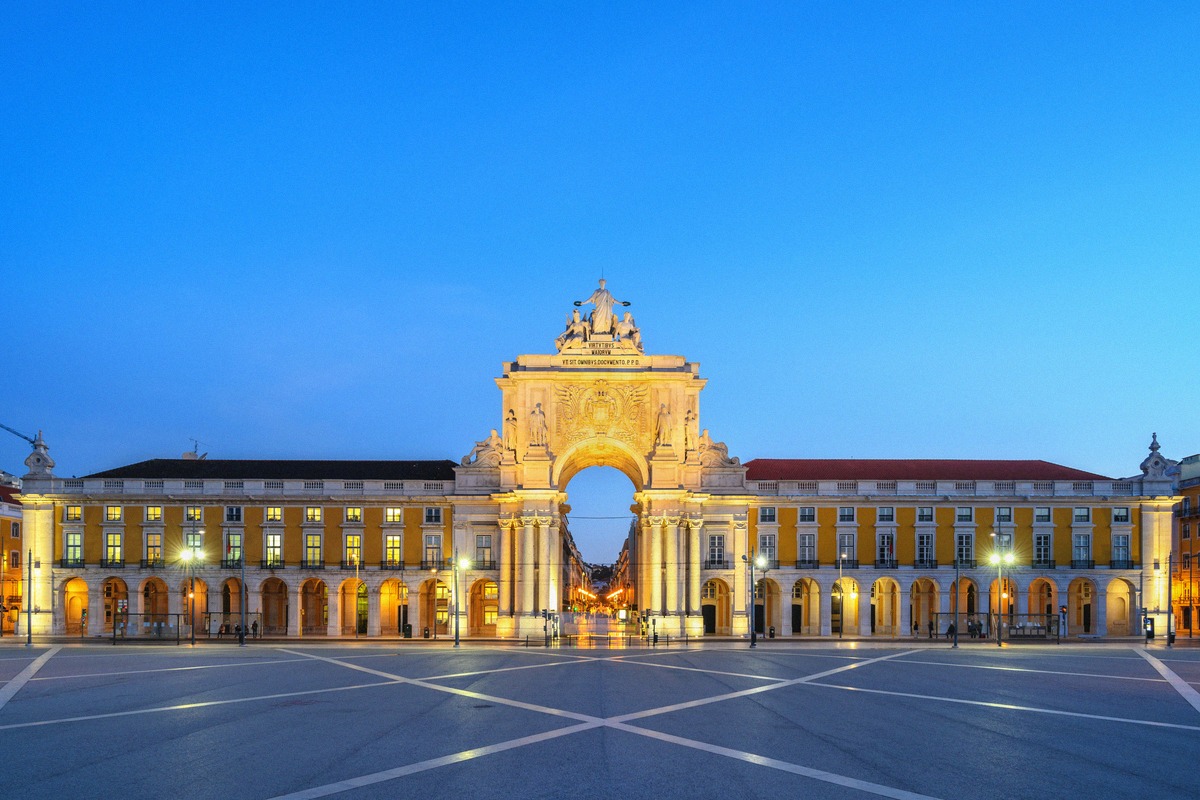
Three sides of the square are lined with long, ochre-yellow arcades, housing cafés, government offices and the Lisboa Welcome Center. At the centre, King José I rides in bronze, the 1775 equestrian statue that marks the square's central axis. Facing the city, the grand Rua Augusta Arch opens up, the monumental triumphal arch through which the pedestrian street Rua Augusta leads into the Baixa.
The finest side is the one facing the river: the steps of the Cais das Colunas, marked by two columns from the old royal landing stage, lead straight down to the water of the Tagus. It's one of the most popular spots in the city to sit by the water and take in the wide view across the river, especially at sunset.
Climbing the Rua Augusta Arch
If ground-level passage isn't enough, head up to the viewing terrace of the Rua Augusta Arch. A lift takes you to the second floor, then 74 steps lead the rest of the way to the terrace, right beneath the statues. From the top, you look straight up the dead-straight Rua Augusta over the Baixa, and in the other direction across the wide Praça do Comércio to the Tagus.
The archway itself is free to walk through at ground level; you only pay for the climb. The terrace costs €5 (adults), children under 5 go free, and entry is free with the Lisboa Card (plus a 10% discount in the souvenir shop). The arch is open daily from 10:00 to 19:00, last entry 18:30. Buy tickets at the counter on Rua Augusta 2 or online through the official Visit Lisboa shop. For more detail, see the dedicated page on the Rua Augusta Arch.
What to combine it with
Praça do Comércio is the natural starting point for exploring the lower town. Right on the square you'll find the Lisbon Story Centre, the Pátio da Galé, and, down by the water, the Cais das Colunas. The triumphal arch opens onto the shopping street Rua Augusta, running straight through the Baixa; a few minutes further on stands the Santa Justa Lift. The square also serves as a landing stage for Tagus ferries and a hub for many bus routes, most walking tours of the Baixa start or finish here.
Visiting: the practicalities
30 to 45 minutes is enough for a stroll around the square and along the waterfront; climbing the arch adds roughly another 20 to 30 minutes. The square is loveliest in the evening, in golden light, when the sun sits low over the Tagus and the arcades glow warm. For the arch, mornings work best, ahead of the crowds and with clear visibility.
The Terreiro do Paço metro station (blue line) sits right on the square; Baixa-Chiado (blue and green lines) is also within walking distance. Tagus ferries depart from the waterfront, and the square is a major stop for many Carris bus routes. For more on getting around, see the guide to public transport in Lisbon. The square itself is free to visit - only climbing the arch costs the €5.
Frequently asked questions
What is there to see at Praça do Comércio?+
Does visiting Praça do Comércio cost anything?+
Why is the square also called Terreiro do Paço?+
How do you get to Praça do Comércio?+
Nearby
Rua Augusta Arch
The monumental triumphal arch links Praça do Comércio with Rua Augusta. A viewing terrace up top looks over the Baixa and the Tagus; the archway below is free to walk through.
Lisbon Cathedral (Sé)
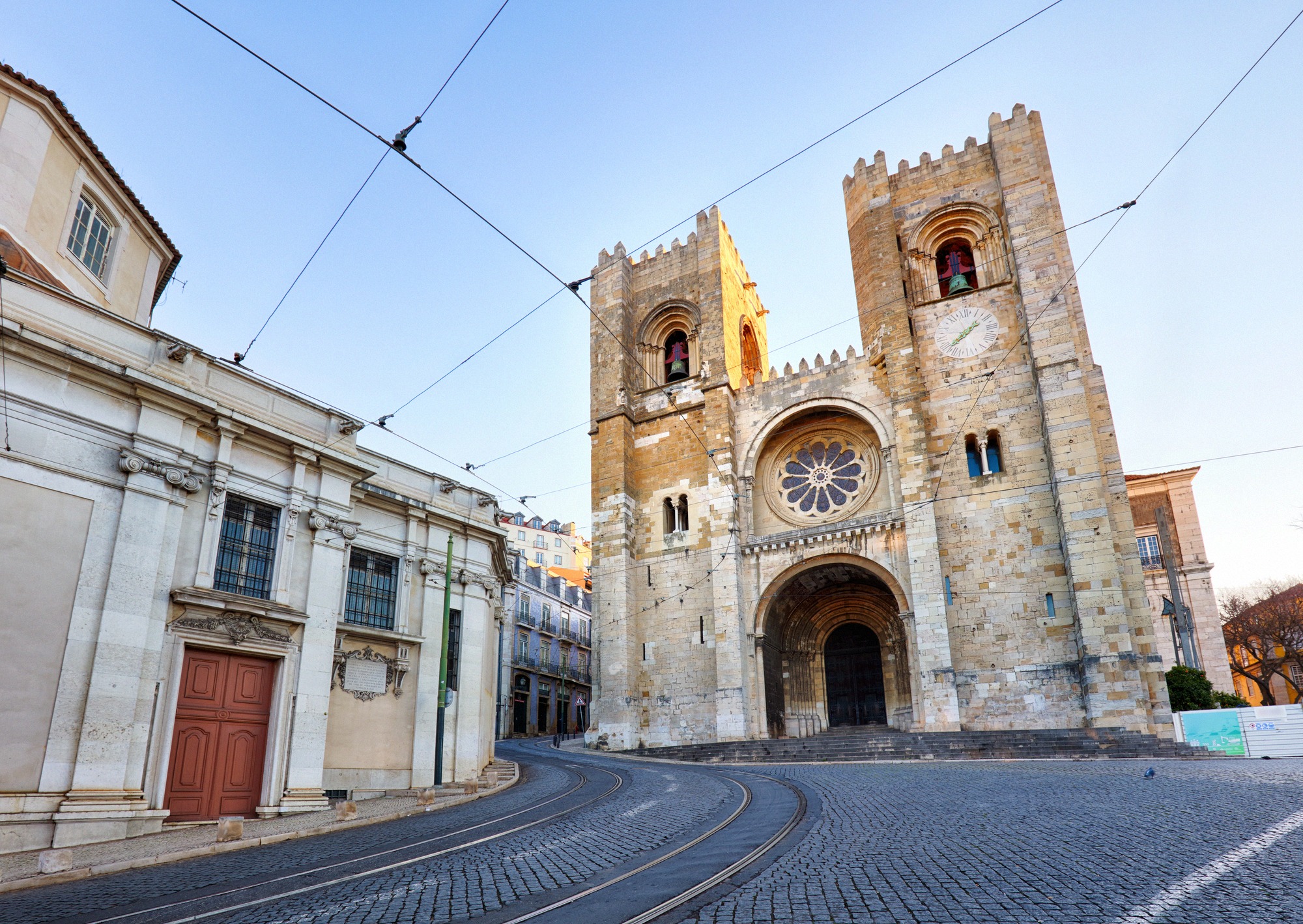
Lisbon's oldest church, from 1147, a fortress-like Romanesque cathedral with twin towers, a Gothic ambulatory and treasury, and the yellow Tram 28 outside.
Santa Justa Lift
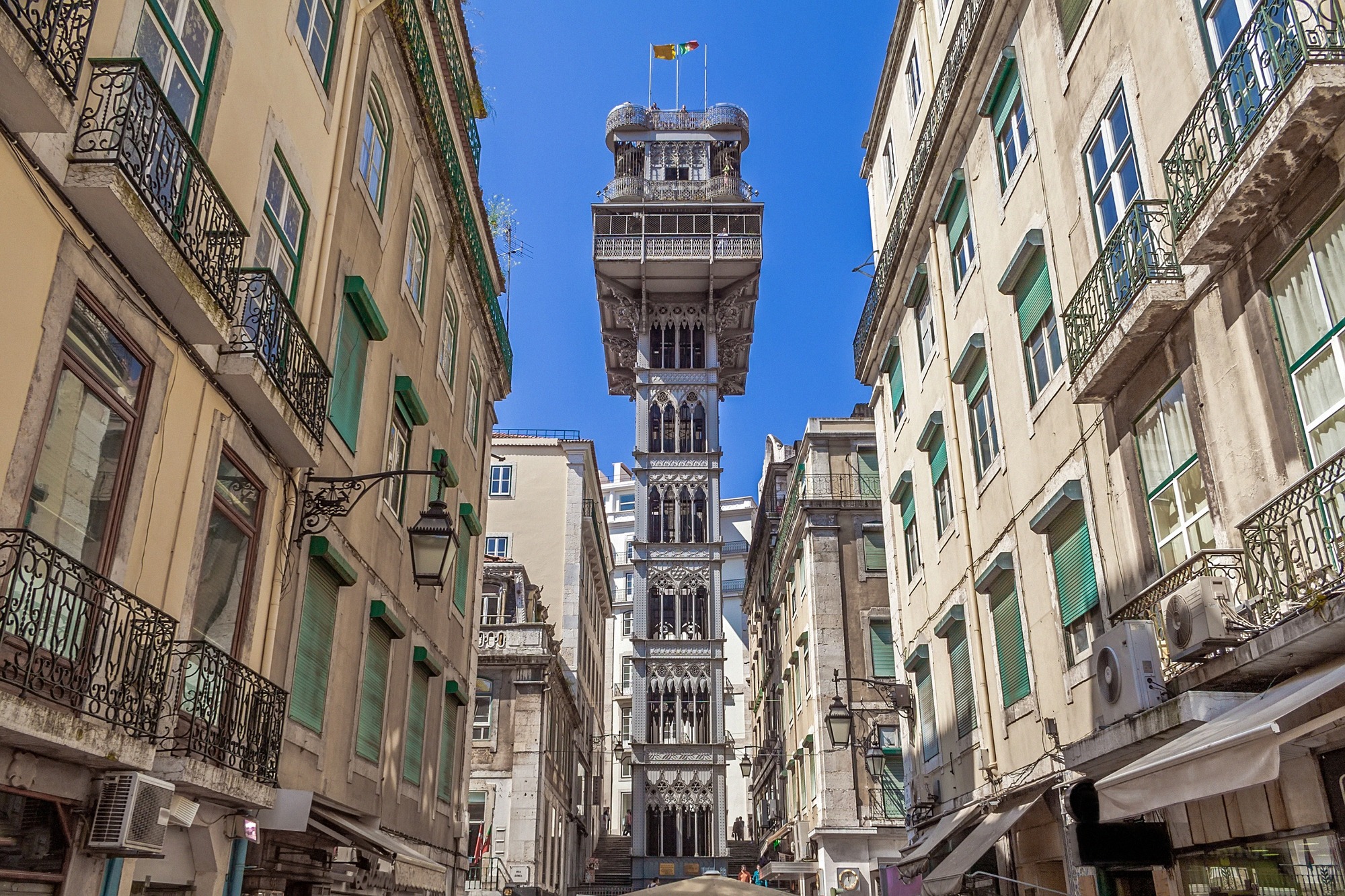
The neo-Gothic cast-iron lift from 1902 links the Baixa with the higher Largo do Carmo, a landmark with a viewing platform over the old town.
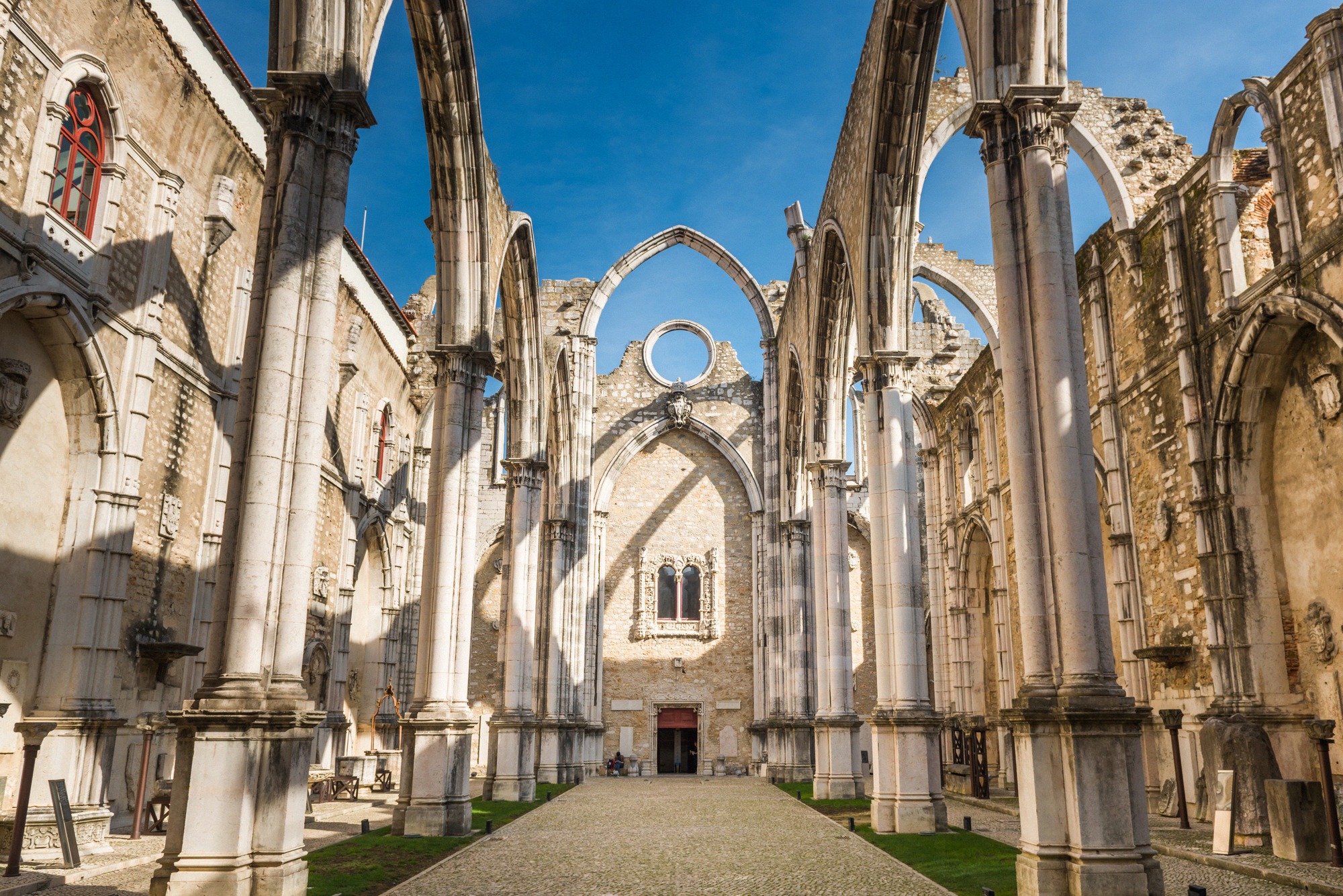
Carmo Convent
This roofless Gothic ruin above the Baixa recalls the 1755 earthquake, its open arches against the sky are now a memorial and archaeology museum.
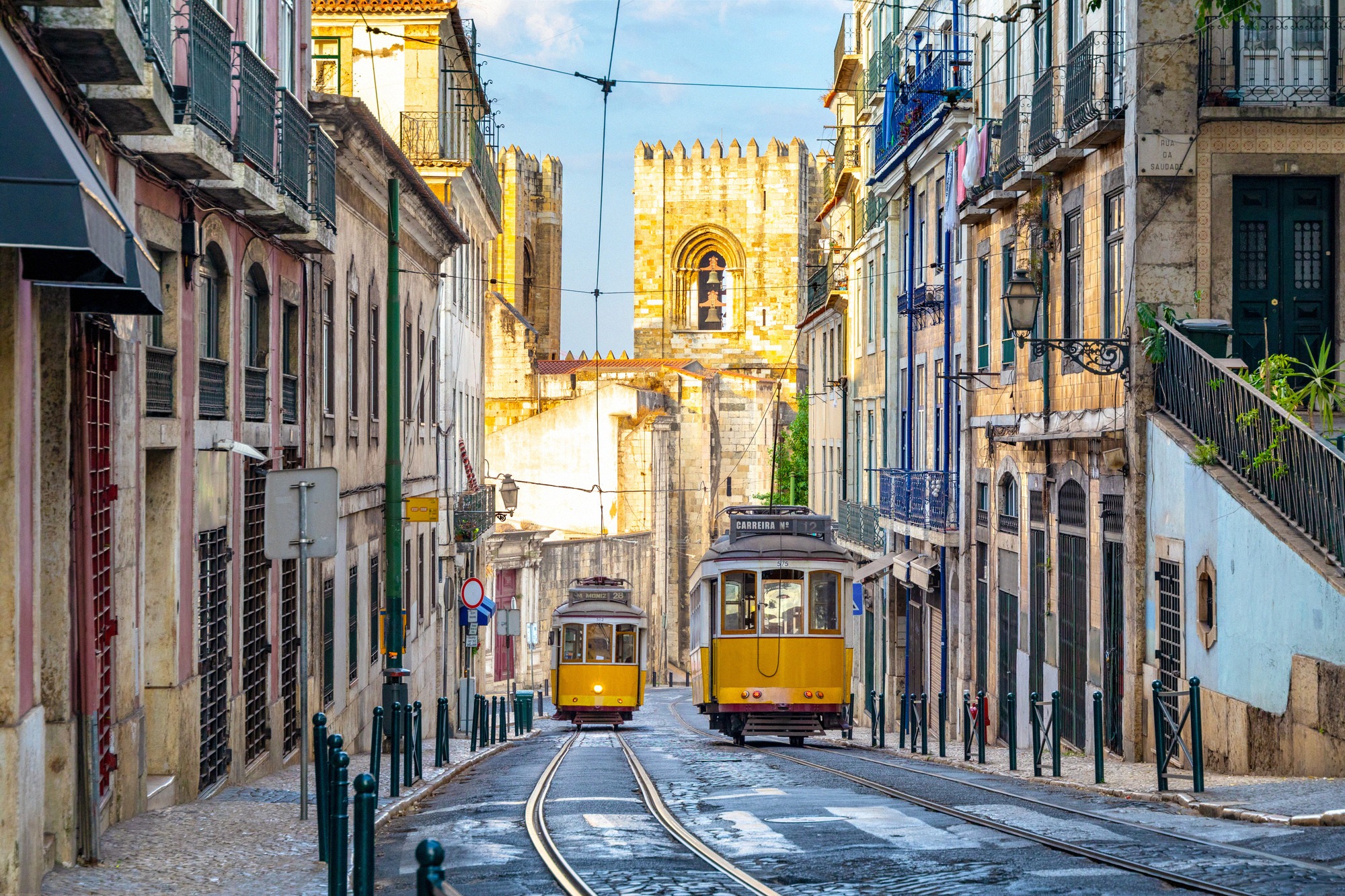
Tram 28
The yellow Carris Line 28E climbs through Graça, Alfama and Estrela, a sightseeing ride at public transport prices, from Martim Moniz to Campo de Ourique.
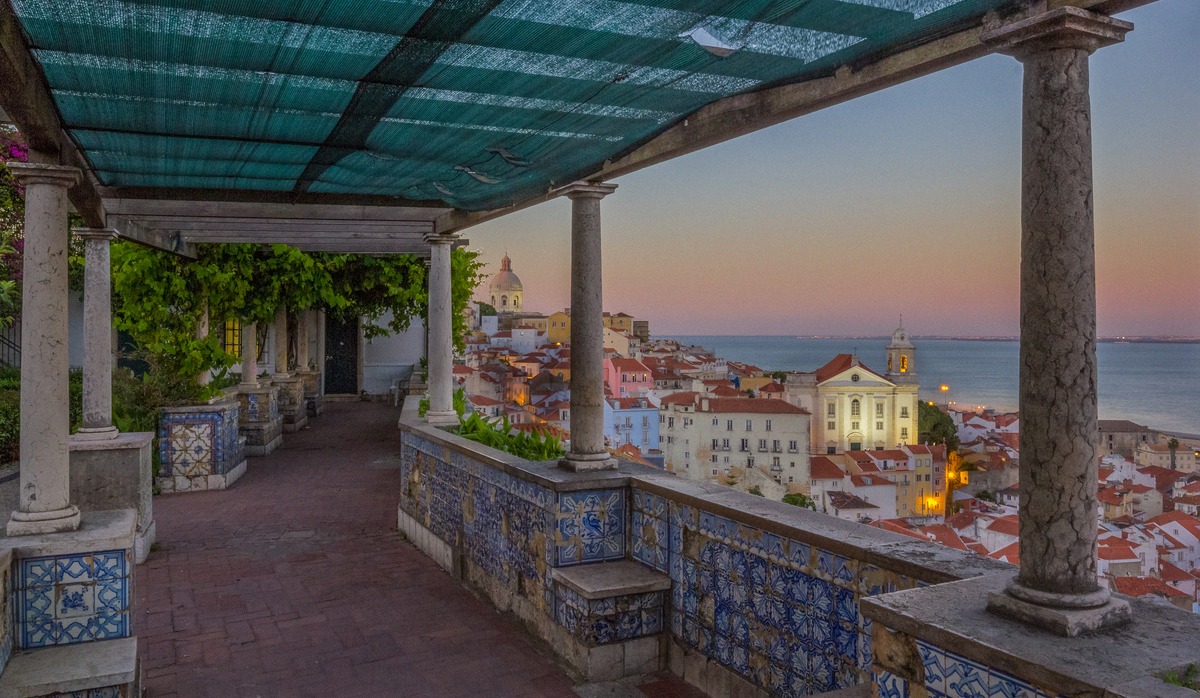
Miradouro de Santa Luzia
The Miradouro de Santa Luzia is Alfama's famous viewpoint terrace with a pergola, azulejos and a postcard view over the red rooftops to the Tagus. Free to visit, on the Tram 28 route.