Miradouro de São Pedro de Alcântara
Viewpoint garden in Bairro Alto
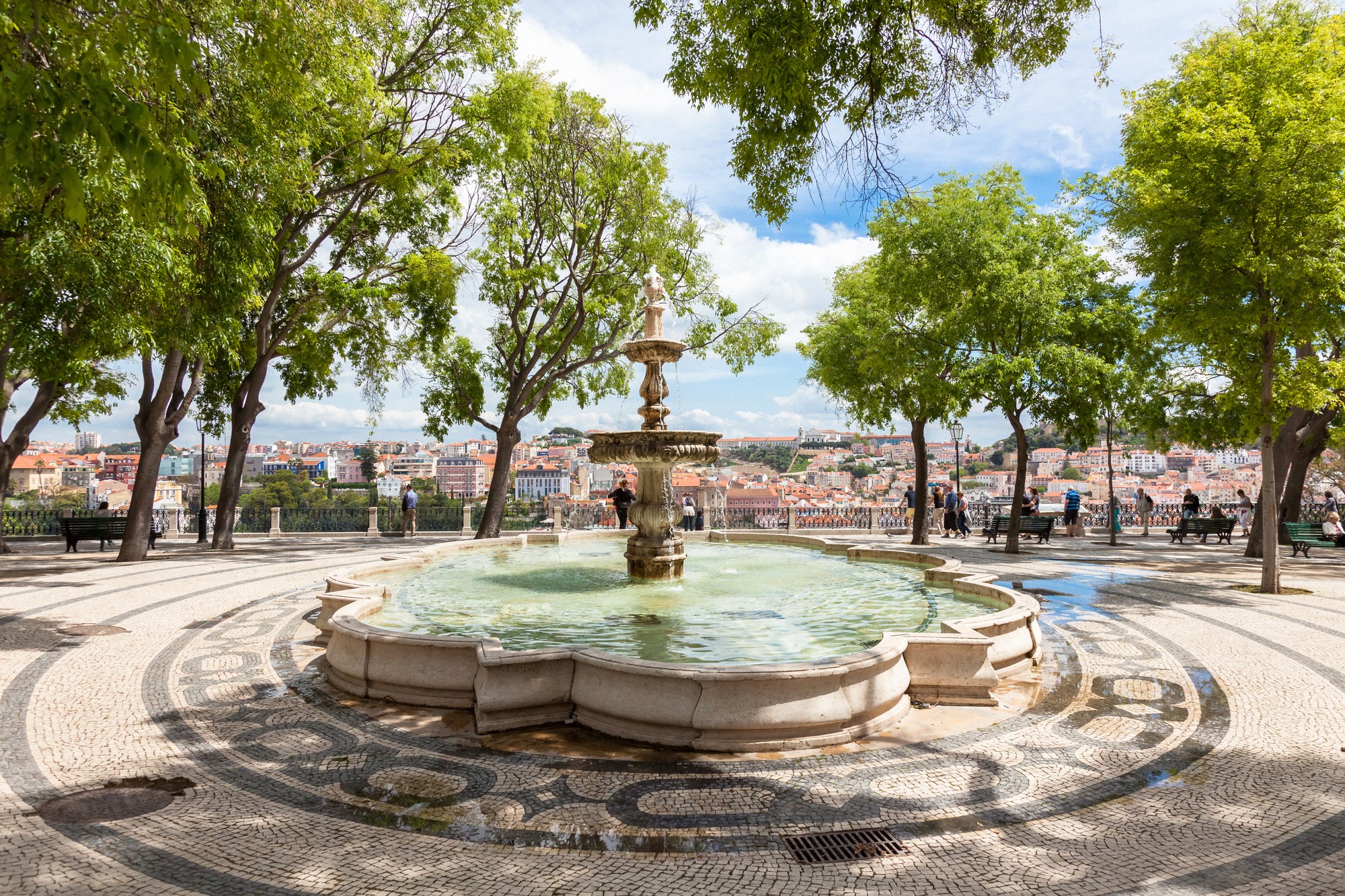
The Miradouro de São Pedro de Alcântara is a two-tier viewpoint garden on the edge of Bairro Alto, with statues, a fountain and open views across the Baixa to São Jorge Castle.
Contents
A garden as a viewpoint
The Miradouro de São Pedro de Alcântara is one of Lisbon's most elegant viewpoints, not just a balcony, but a two-tier garden laid out at the upper edge of the nightlife district Bairro Alto. Across the dip of the Baixa, you look straight over to the castle hill opposite, with São Jorge Castle and the old quarter of Alfama. Admission is free, and the garden is open around the clock.
The two levels are linked by stone steps. The lower terrace, laid out in a French style, carries busts on pedestals; the upper level is planted with flower beds and a fountain. A 1962 azulejo (tile) panel by Fred Kradolfer labels the landmarks visible from the miradouro, handy for making sense of the view.
History and figures
The garden took shape in the decades after the Liberal Wars (1832-34); the oldest paving dates to 1876, and the lower level, with its cascade and pool, reflects 19th-century work. The lower terrace holds 21 busts of gods and heroes from Greco-Roman mythology alongside figures from Portuguese history, among them Vasco da Gama, the poet Luís de Camões and Afonso de Albuquerque.
A 1904 monument honours the journalist Eduardo Coelho, founder of the newspaper Diário de Notícias, with a bust and a figure of a newsboy (sculptor Costa Mota o Tio, architect Álvaro Machado). Taken together, the miradouro is as much a city garden with monuments as it is a photo stop.
Getting there: Glória funicular closed, bus 51E as a replacement
Traditionally the climb was handled by the Ascensor da Glória, the yellow funicular that trundled up from Praça dos Restauradores and stopped just below the garden. Since the fatal derailment of 3 September 2025, however, this funicular has been out of service, and it remained closed through 2026. Operator Carris has not announced an official reopening date.
While it is closed, Carris runs a replacement bus service on line 51E (Glória), covering the funicular's route. Alternatively, the garden is reachable on foot from the Baixa, the climb is short, but noticeably steep.
If the funicular does resume service: the 2026 on-board fare for the Carris funiculars is €4.30 for up to two rides (up and down on the same day). It works out much cheaper with Navegante-Zapping pay-as-you-go credit; a 24-hour ticket covering Carris and the metro also includes the funiculars, and with the Lisboa Card the funiculars are included as well.
Visiting and practicalities
Allow 20 to 40 minutes, enough time to walk both levels, take in the view and pick out the landmarks on the azulejo panel. The garden is open 24 hours a day, every day, free of charge. It is most atmospheric at sunset, when São Jorge Castle opposite is floodlit, and, correspondingly, busiest and most sociable.
There is a kiosk café (quiosque) at the miradouro, open 10:00-21:00 Sunday to Thursday and until 02:00 Friday and Saturday, with live music or a DJ in the evenings, handy for a break with a view. The garden sits centrally in Bairro Alto and pairs well with the nearby Igreja de São Roque, a stroll through Príncipe Real, and further viewpoints on our overview of Lisbon's miradouros. For anyone collecting Lisbon's finest views, this is one of the most rewarding, and one of the few that is also a proper garden in its own right.
Frequently asked questions
How much does it cost to visit the Miradouro de São Pedro de Alcântara?+
How do you get to the Miradouro de São Pedro de Alcântara?+
What can you see from here?+
Is it worth visiting without the funicular?+
Nearby
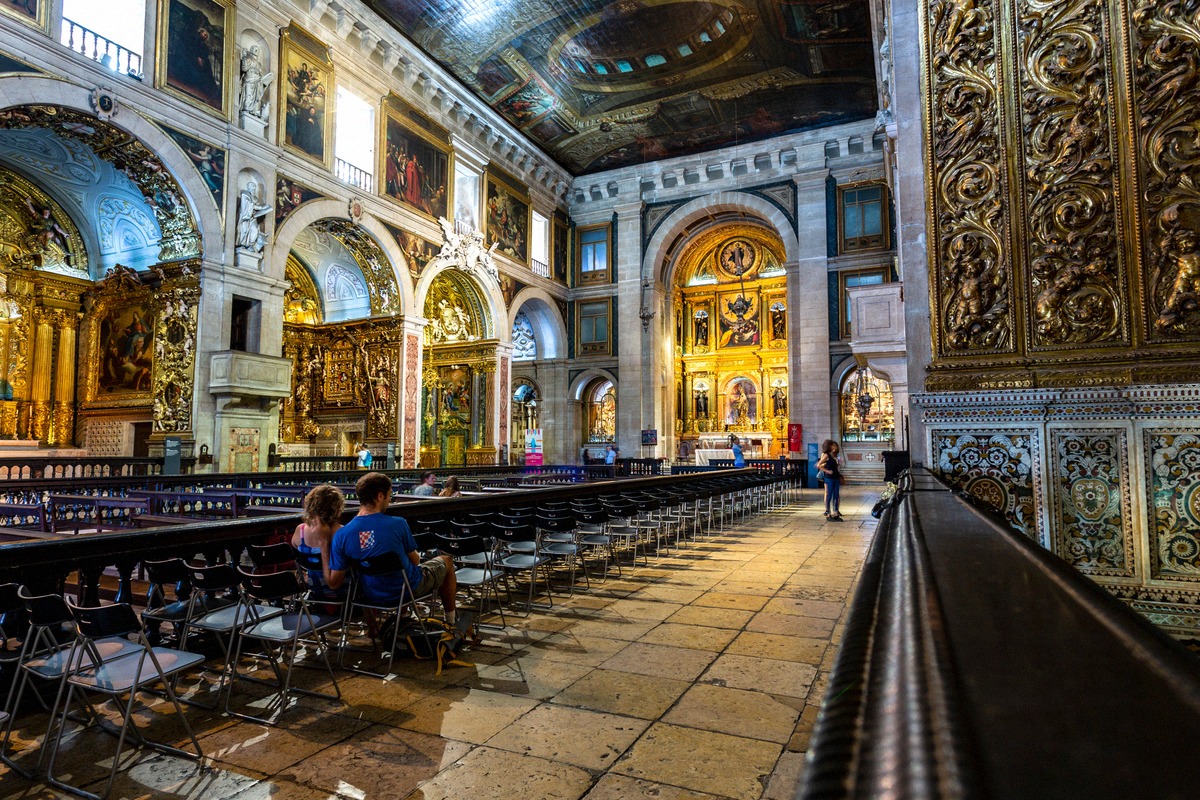
Igreja de São Roque
Behind a plain façade, this Jesuit church in Bairro Alto hides one of the world's most lavish Baroque chapels, made in Rome from gold, silver and lapis lazuli.
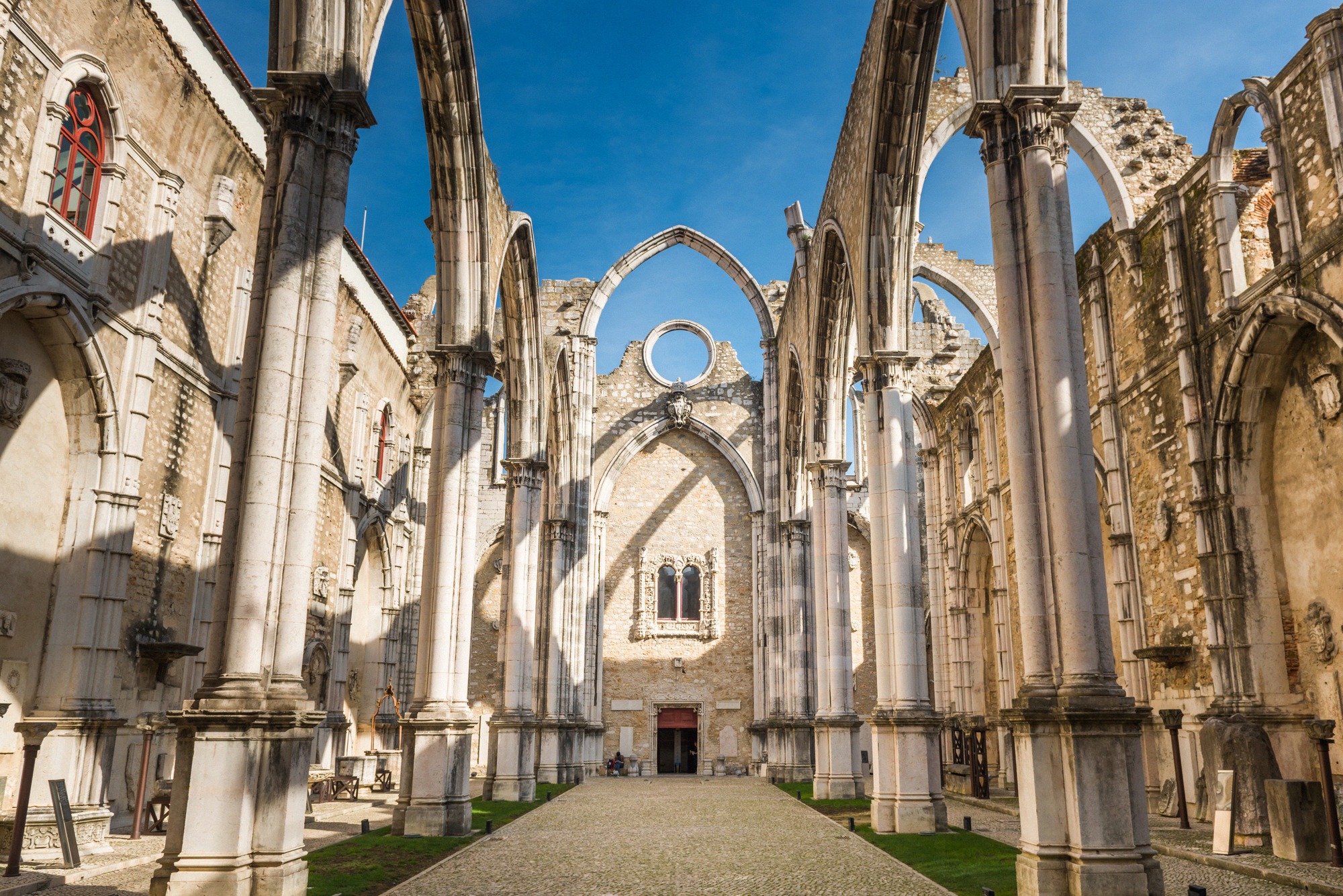
Carmo Convent
This roofless Gothic ruin above the Baixa recalls the 1755 earthquake, its open arches against the sky are now a memorial and archaeology museum.
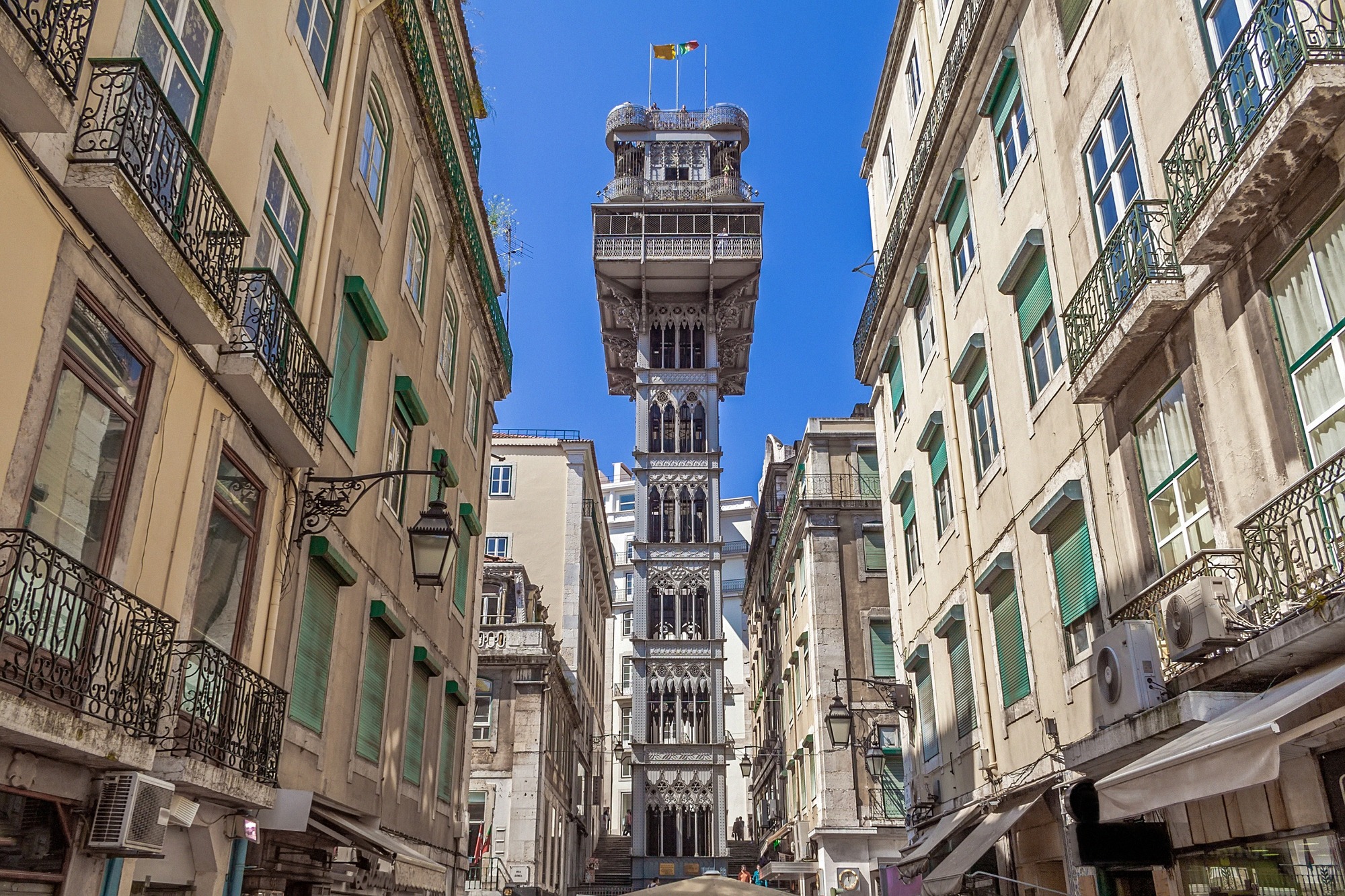
Santa Justa Lift
The neo-Gothic cast-iron lift from 1902 links the Baixa with the higher Largo do Carmo, a landmark with a viewing platform over the old town.
Bica Funicular
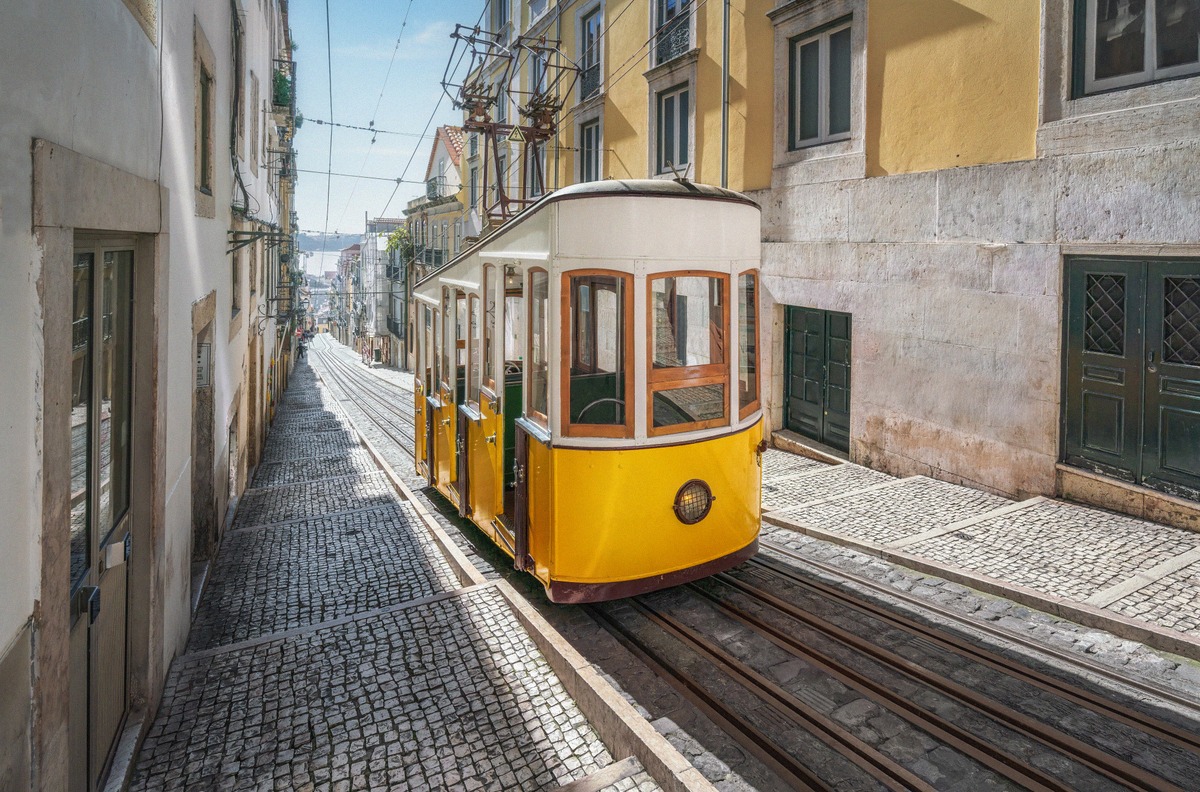
The yellow funicular from 1892 climbs one of Lisbon's steepest, most photogenic streets, a national monument between Bairro Alto and Cais do Sodré.
São Jorge Castle
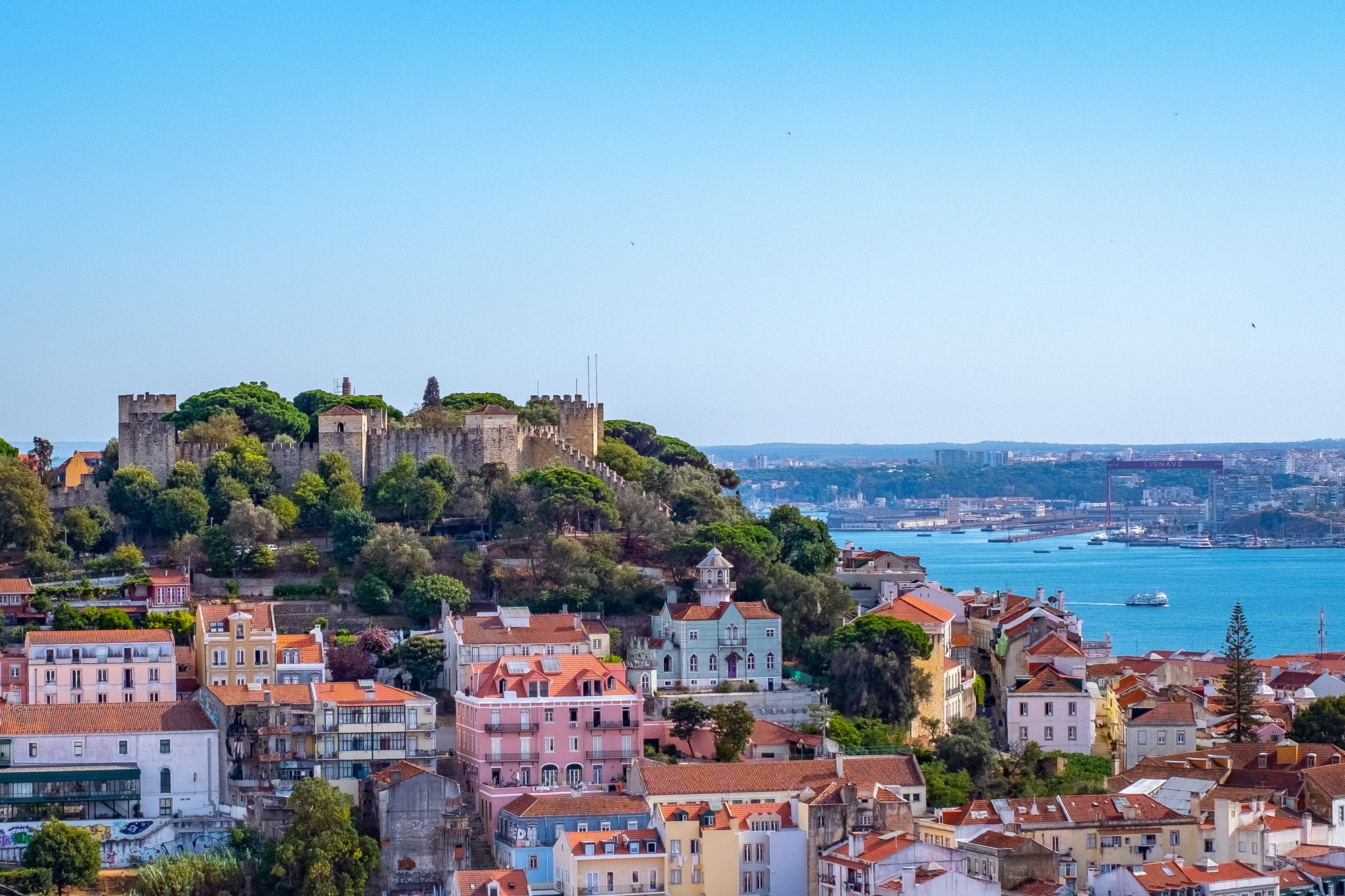
The Moorish fortress crowns Lisbon's highest hill, with walkable ramparts, peacocks in the courtyard and the best all-round view over the old town and the Tagus.

Time Out Market
Inside the historic Mercado da Ribeira, two dozen stalls gather the best chefs and restaurants in Lisbon under one roof, the city's most popular food hall.