Experiencing Fado in Lisbon
Where to hear Lisbon's UNESCO-listed song at its most authentic - Casas de Fado and fado vadio tascas in Alfama, Mouraria and Bairro Alto, with prices, etiquette and how to get there.
By lissabon.info editorial team · Travel editors · Last updated: June 2026
Contents
Fado is Lisbon's soul set to music, a melancholic song about longing, fate and the untranslatable Portuguese "saudade", carried by voice, classical guitar and the distinctive pear-shaped Portuguese guitar. It has been inscribed on the UNESCO Intangible Cultural Heritage list since 2011. Hearing it live belongs on any visit to Lisbon, but there is a world of difference between an honest tasca and a polished tourist show. This guide covers where to hear genuine fado, what it costs and what to expect.
Casa de Fado or fado vadio?
There are two forms, and the difference shapes the whole evening. The professional Casas de Fado offer a fixed programme with dedicated singers, usually paired with dinner. They are easy to plan around, bookable in advance, and the most accessible way in for first-timers.
Fado vadio, by contrast, is the original, spontaneous form, roughly "wandering fado". In simple tascas, guests, amateurs and occasionally professionals take turns singing, with no set programme. Entry is often free, but a minimum spend usually applies. This is where the rawest emotion comes through, though it takes some patience and a bit of luck, since the atmosphere on any given night can't be booked.
The scene is concentrated in three neighbourhoods: the old Alfama, fado's historic home; Mouraria, where it was born; and the bohemian Bairro Alto, which became a second stronghold with many venues from the 1930s onward.
Casas de Fado with dinner
For a reliable, well-organised evening, head to one of the established Casas. In Alfama, near the Sé Cathedral, is Clube de Fado (Rua de São João da Praça 86-94), open daily from around 20:00, at roughly €50 to €60 per person. A few steps away, Mesa de Frades (Rua dos Remédios 139) performs in an 18th-century chapel, one of the oldest continuously running fado venues in the city; open Monday to Saturday from about 20:30, with a fixed set menu. Casa de Linhares (Beco dos Armazéns do Linho 2) sits in the vaulted cellar of a Renaissance palace with natural acoustics, with dinner at around €50.
In Bairro Alto, Adega Machado (Rua do Norte 91) has kept the tradition alive since 1937, open daily from around 19:30, with dinner at roughly €45 to €55 and a cheaper short session, "Fado Inside the Box", for under €20. Also long-established is O Faia (Bairro Alto, since 1947). A little quieter, in the Lapa district, is Senhor Vinho (Rua do Meio à Lapa 18), also in the €50 to €60 per-person range.
Allow three hours or more for a full dinner evening. The food rarely reaches fine-dining standards, you're mainly paying for the music and the atmosphere. The prices above are guide figures from travel sites, not official rates, so ask when booking about the minimum spend and whether wine is included.
Fado vadio in the tascas
If you're after the original, unfiltered version, head to one of the small tascas. The best-known starting point is Tasca do Chico (Rua do Diário de Notícias 39) in central Bairro Alto, open daily from around 19:00 to 3:00, free entry with a minimum spend of roughly €10 (at least one drink, beer around €3 to €4). The place is tiny (about 25 seats), cramped and loud; book ahead or arrive early.
In Alfama, A Baiuca (Rua de São Miguel 20) pairs singing with a meal for around €25, open Mondays and Thursdays to Sundays from roughly 19:30 to 23:30 (closed Tuesdays and Wednesdays), bookable by phone only. In Mouraria, on Largo da Severa, Maria da Mouraria is a traditional venue at the historic heart of the neighbourhood; singing here typically starts fairly late. Beyond these named addresses, the rule for Mouraria is simple, keep your eyes and ears open, since many of the best fado vadio nights don't appear in any guidebook.
Etiquette, how to behave
Fado demands respect, and the rules are unwritten but clear. As soon as the Portuguese guitar starts, the room falls silent. During a performance, don't eat, drink, talk or clink cutlery. Applause and photos belong in the breaks between sets, not in the middle of a song.
Plan your evening so the food is on the table before the first songs begin, the dinner venues are set up with this in mind. One note on the bill: the couvert (bread, butter, olives) is standard practice in Portugal and comes at an extra charge, though you're free to decline it and send it back. In ordinary restaurants it's under €2 per person, in nicer ones under €5, fado venues are known for charging more for it, so it's worth checking the bill carefully.
Avoiding tourist traps
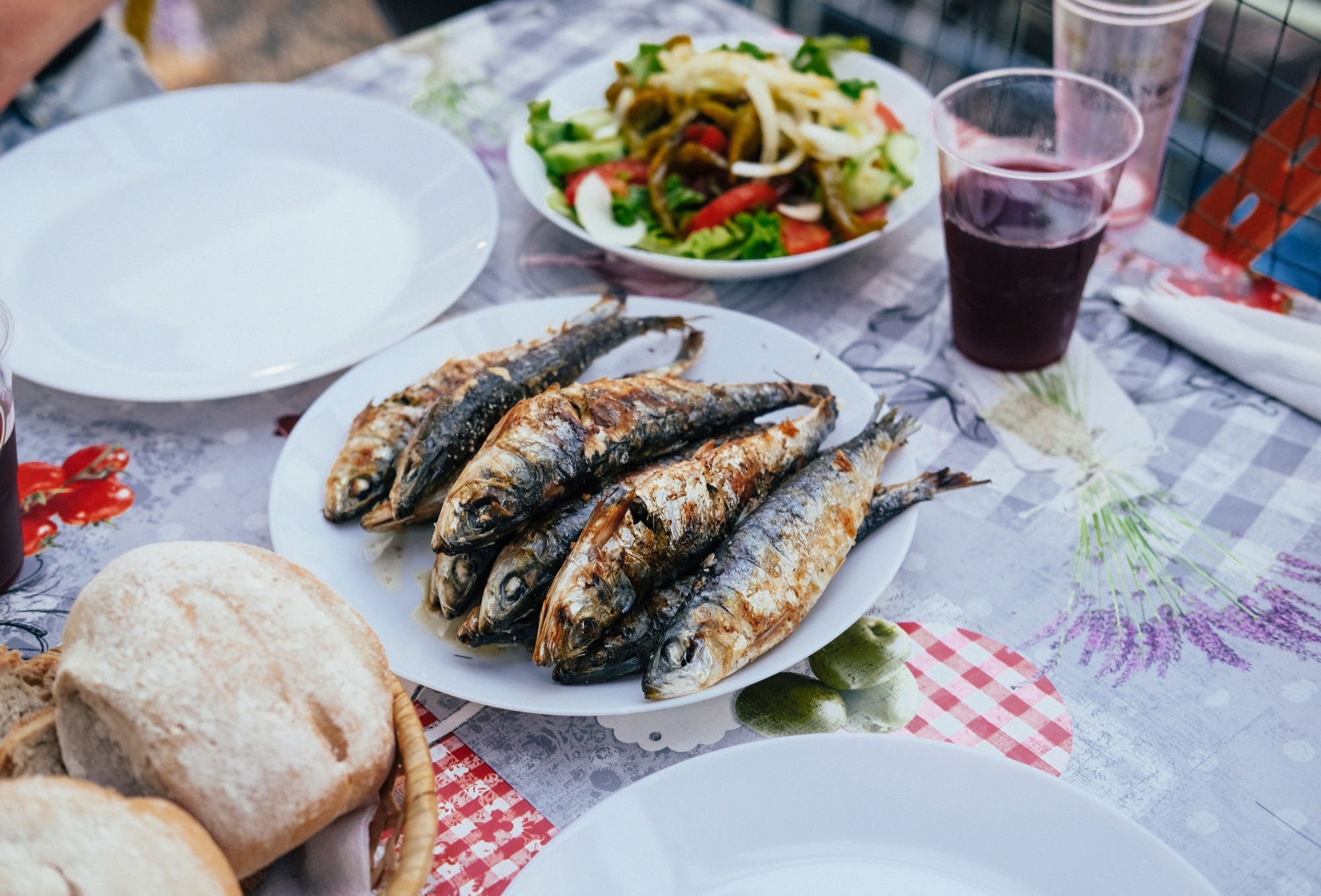
Around Praça do Comércio, Rossio and Rua Augusta, restaurants lure visitors in with staged fado shows, overpriced set menus, mediocre food and sometimes pushy touts. As a rule of thumb: grilled fish that costs €12 in an honest tasca can easily appear on the menu here for €25 or more. Locals avoid Praça do Comércio when it comes to eating.
Praça do Comércio and Rossio are also hotspots for scammers and touts, including people posing as drug dealers, who are almost always simply after your money. A polite, firm "no" is enough. For fado, it's better to stick to the addresses in Alfama, Mouraria and Bairro Alto, or venues recommended by locals, rather than following a "fado tonight" sign down a tourist trail.
Getting there, best time to go, and useful background
The fado neighbourhoods sit on Lisbon's hills. The most atmospheric way to reach Alfama is the historic Tram 28 (Martim Moniz - Prazeres), the only public transport route that runs through Graça and Alfama; Tram 12 runs a shorter loop through Baixa, Mouraria and Alfama and often has shorter queues. Alfama itself has no metro station, you can reach Mouraria via Martim Moniz metro station (green line). A car is not recommended: the narrow streets, largely reserved for residents, make parking very difficult, so a public car park is the better option.
Fado runs year-round, since the Casas perform indoors and aren't weather-dependent, making it a good evening option even during the quiet, mild winter. Spring (March to May) and autumn (September to October) are generally the most pleasant times to visit, with mild weather, smaller crowds and lower prices; June to August is hot, busy and more expensive, and in August many locals leave the city. If you want to experience fado on a grand scale, plan around September, when Alfama hosts the Santa Casa Alfama festival, in 2026 on 28 and 29 September. For more on choosing when to go, see the guide best time to visit Lisbon.
If you'd like some background before you go, the Museu do Fado in Alfama (Largo do Chafariz de Dentro N.º 1) is worth a visit. This interactive museum tells the story of fado as UNESCO cultural heritage and introduces its defining artists. It's open Tuesday to Sunday, 10:00 to 18:00 (last entry 17:30), closed Mondays, as well as on 1 January, 1 May and 24, 25 and 31 December. Admission is €5 standard, €2.50 reduced (ages 13 to 25) and €4 for students and seniors, according to tourism board figures; children under 12 go free. Tickets are only available on-site at the ticket desk or via BOL. The museum is compact, so a visit of just over an hour is usually enough.