25 de Abril Bridge
Red suspension bridge & Tagus landmark
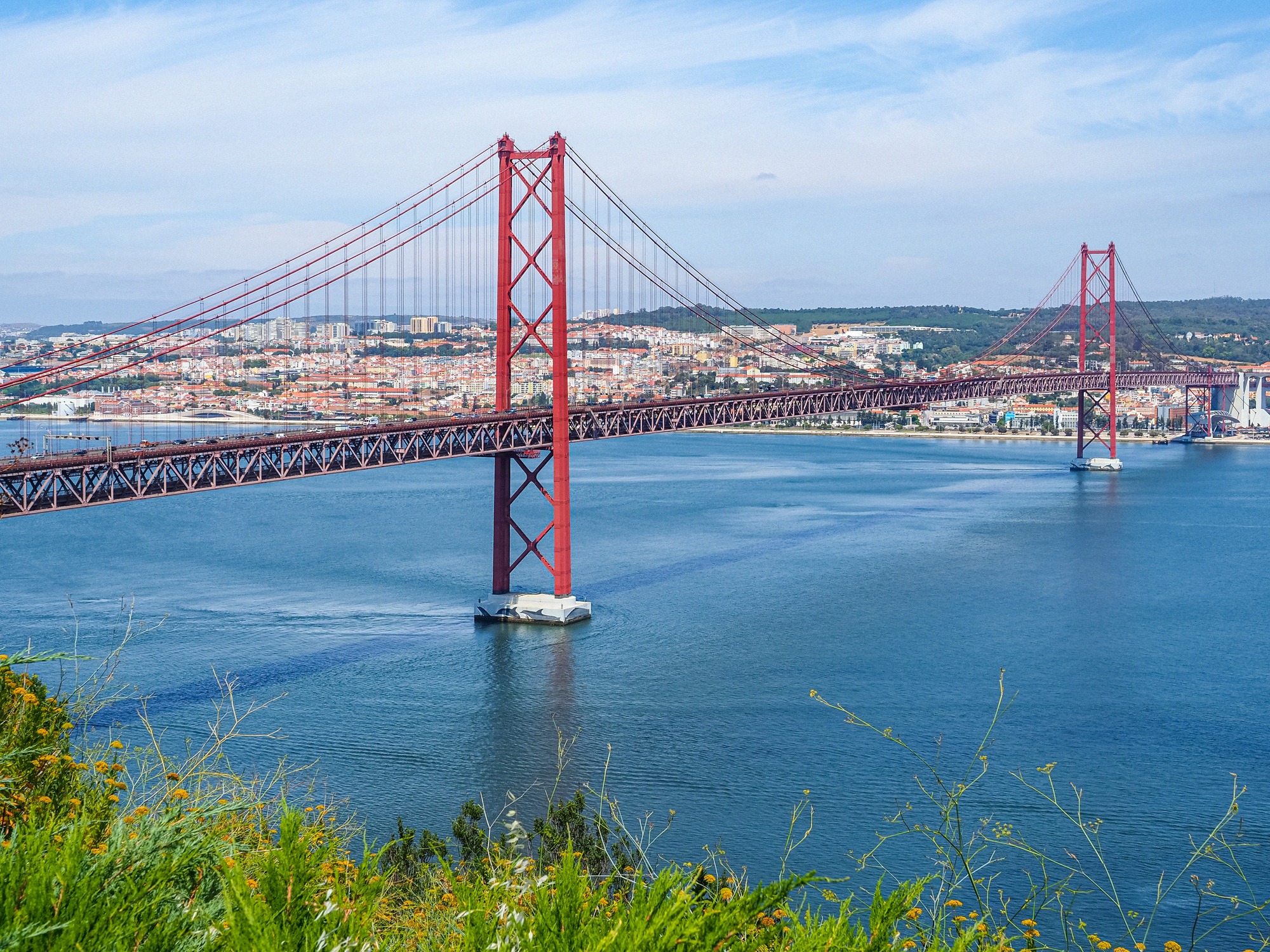
The red suspension bridge over the Tagus resembles the Golden Gate Bridge and links Lisbon to Almada - Cristo Rei watches over the south bank.
Contents
Lisbon's red bridge
The 25 de Abril Bridge spans the Tagus in bold red and links Lisbon to Almada on the south bank. Its suspension design and colour make it look a lot like the Golden Gate Bridge, and that's not entirely a coincidence: construction involved the US firm American Bridge Company, which also worked on bridges in the San Francisco Bay Area. That company did not build the Golden Gate Bridge itself, though, so the popular "same builder" story isn't quite accurate.
The bridge opened on 6 August 1966, originally named Ponte Salazar after the dictator, and was at the time the longest suspension bridge in Europe. It has carried its current name since the Carnation Revolution of 25 April 1974, which ended the dictatorship.
Facts and engineering
The bridge is purely a transport structure with no visitor opening hours and is effectively in use around the clock. It is run by the private concessionaire Lusoponte. Key figures:
- Total length around 3,173 m, main span about 1,013 m
- Towers 190.47 m high, clearance 70 m above mean high water
- Upper deck: six traffic lanes
- Lower deck: double-track electrified railway
There is no footpath or cycle path, the bridge cannot be crossed on foot. The one exception is the Lisbon Half Marathon, held once a year in March, when the route is briefly opened to runners. There are no guided tours across the carriageway and no restaurant on the bridge.
Where to get the best view
You don't walk onto the bridge itself, it's mainly a landmark to look at from a distance. The riverside viewpoints are free and open at all times:
- the miradouros of the upper town, with views over the Tagus
- the riverbank in Belém, from where the bridge is especially photogenic
- the south bank in Almada, right beneath the structure
Sunset is the most atmospheric time to see it, when the bridge's red glows against the evening sky. Timing varies a lot across the year, roughly from around 17:40 in mid-January to about 21:05 in mid-July (during daylight saving time). These are astronomical estimates, not fixed opening hours.
Pilar 7 Bridge Experience
For a closer look at the bridge, head to the Pilar 7 Bridge Experience on the north bank, built inside one of the bridge's piers (Alcântara). A glass lift and exhibition rooms cover the bridge's construction and engineering, and a platform extends out beneath the roadway.
- Opening hours: daily 10:00-18:00, last admission 17:00, closed on 25 December
- Price: adults from around €6 (concessions around €4), children under 5 free, VR add-on €1.50; free with the Lisboa Card
- Address: Avenida da Índia, Pilar 7, 1349-028 Lisboa
- Getting there: Tram 15, buses 714/727/732/751, the Lisbon-Cascais railway to Alcântara-Mar station, or parking at Praça das Indústrias
The lift is occasionally closed for maintenance, in which case the only way up is by stairs. There is no reliable official information on accessibility.
Cristo Rei on the south bank
On the south bank in Almada, the outstretched Cristo Rei statue keeps watch over the river - modelled on the statue in Rio de Janeiro. A lift from the base (the final stretch by stairs) leads up to an observation platform with sweeping views of the bridge, the Tagus and the city.
- Opening hours: Oct-Mar daily 10:00-18:00, Apr-Sep 10:00-19:00, last ascent 20 minutes before closing
- Admission (monument/lift): ages 0-7 free, ages 8-12 €3, ages 13+ €10; parking €2
- The chapel and ground-level areas are free; groups need 72 hours' notice, €3 per person
The platform can reach capacity when it's busy near closing time. Official information on visiting is available at cristorei.pt.
Visiting & practicalities
For a simple photo stop, allow 15 to 30 minutes from a miradouro or the riverbank in Belém. Budget around an hour for the Pilar 7 Bridge Experience, and if you also cross to Almada for Cristo Rei and explore the area, that fills a good half day.
The bridge has no official tourism website of its own, it's a transport structure. The two visitor experiences around it are run independently (Pilar 7 is marketed through the tourist board, Cristo Rei runs its own website). The bridge itself and all the riverside viewpoints are free.
The view of the bridge pairs well with the sights of Belém, such as the Jerónimos Monastery, the Belém Tower and the Monument to the Discoveries, or with a stop at one of the miradouros during the blue hour. If you're short on time, simply take the bridge in as part of the skyline - Pilar 7 or Cristo Rei are worth the extra effort mainly if you're interested in engineering or the view.
Frequently asked questions
Why is the bridge called 25 de Abril?+
Can you walk across the 25 de Abril Bridge?+
Why does it look like the Golden Gate Bridge?+
Where is the best place to see the bridge?+
Nearby
MAAT
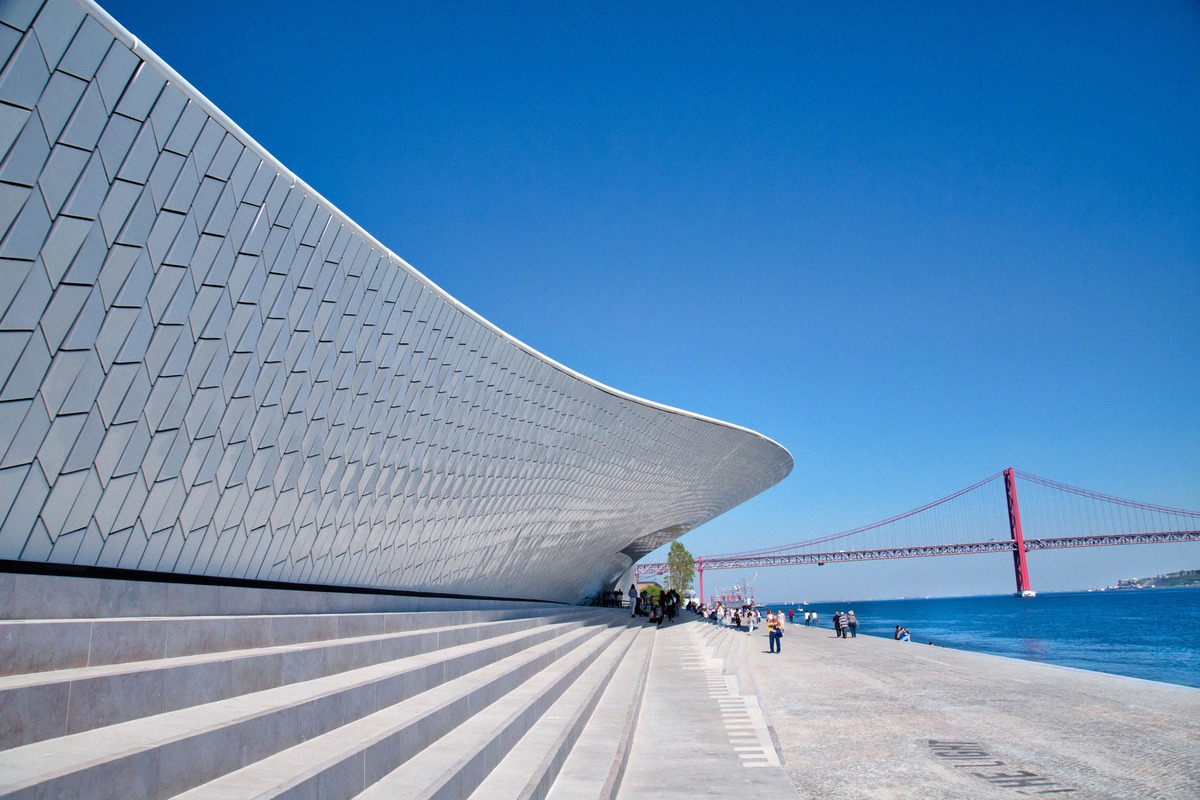
MAAT in Belém is Lisbon's boldest museum building on the Tagus, a curving new wing with a free rooftop walkway, plus the historic old Central Tejo power station.
Monument to the Discoveries
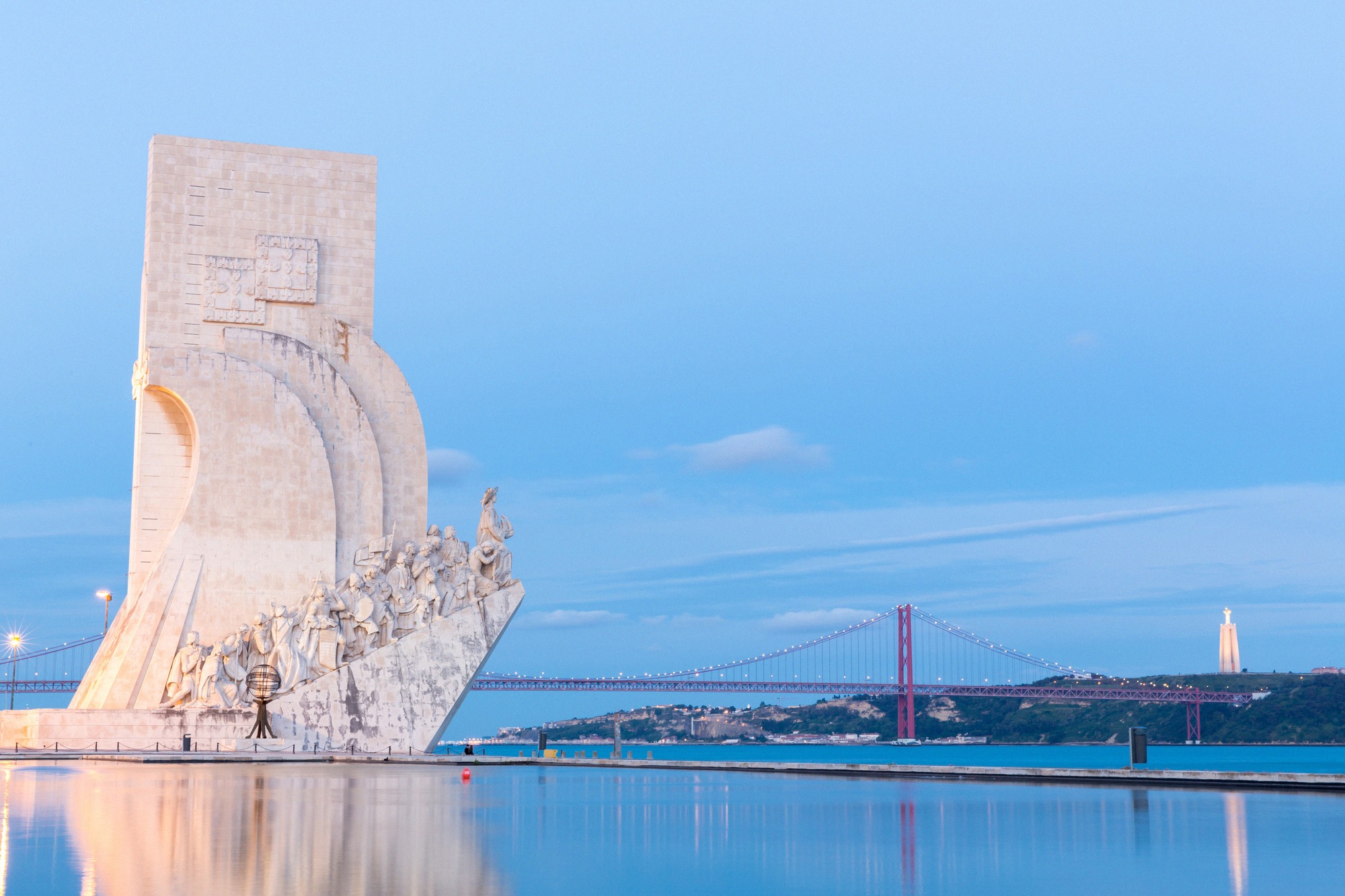
The Age-of-Discovery monument on the Tagus in Belém, shaped like a caravel's bow, with 33 figures from the age of exploration, a viewing platform and the world map set in the paving below.
Jerónimos Monastery
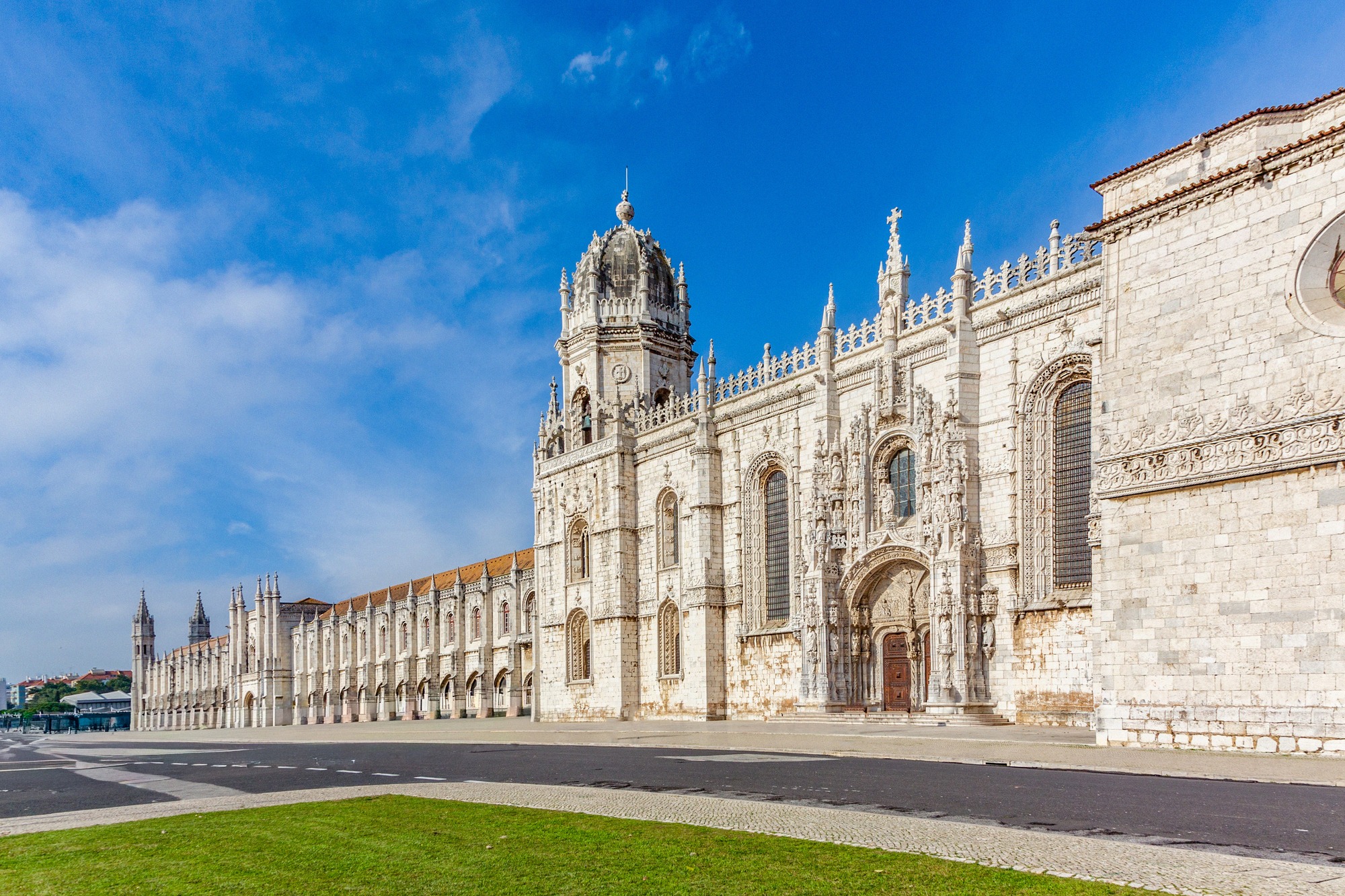
UNESCO World Heritage site in Belém and the high point of Manueline architecture, with a two-storey cloister and the free monastery church where Vasco da Gama is buried.
Estrela Basilica
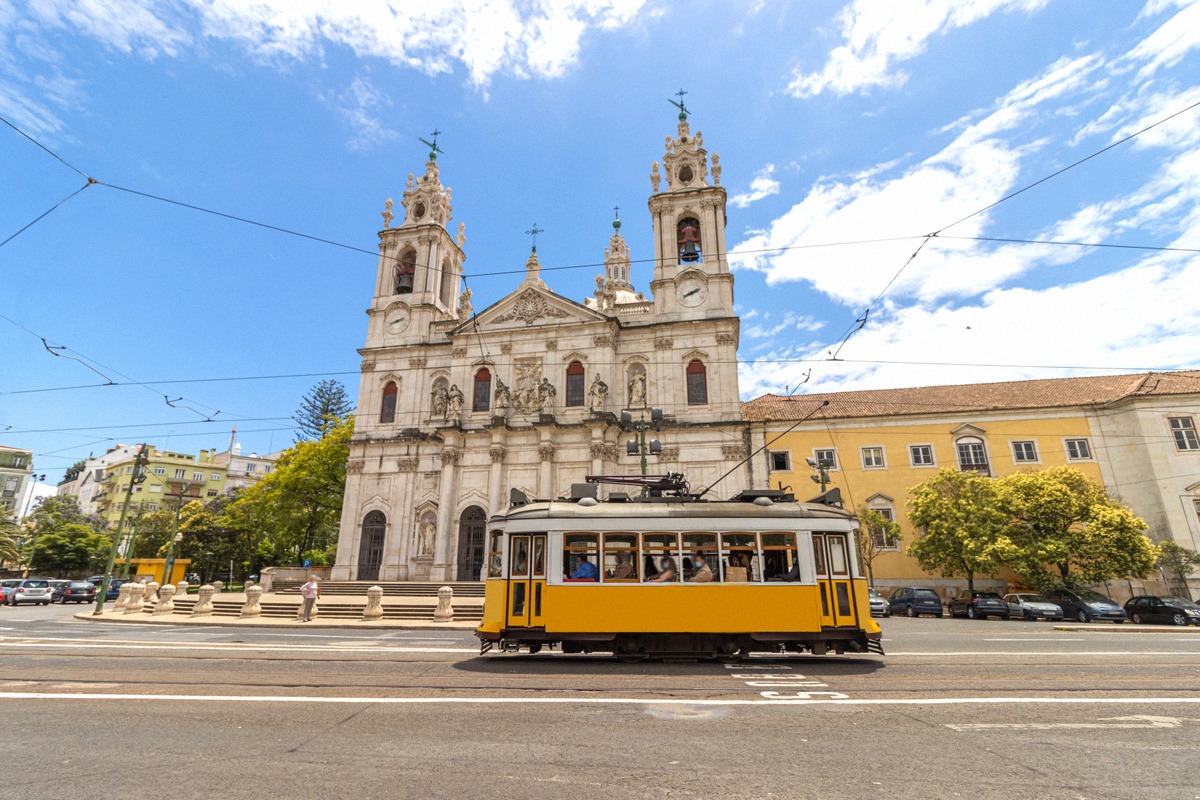
The Basílica da Estrela of 1790 crowns a hill in western Lisbon, marble interior, the tomb of Queen Maria I and a cork nativity scene.

Time Out Market
Inside the historic Mercado da Ribeira, two dozen stalls gather the best chefs and restaurants in Lisbon under one roof, the city's most popular food hall.
Bica Funicular
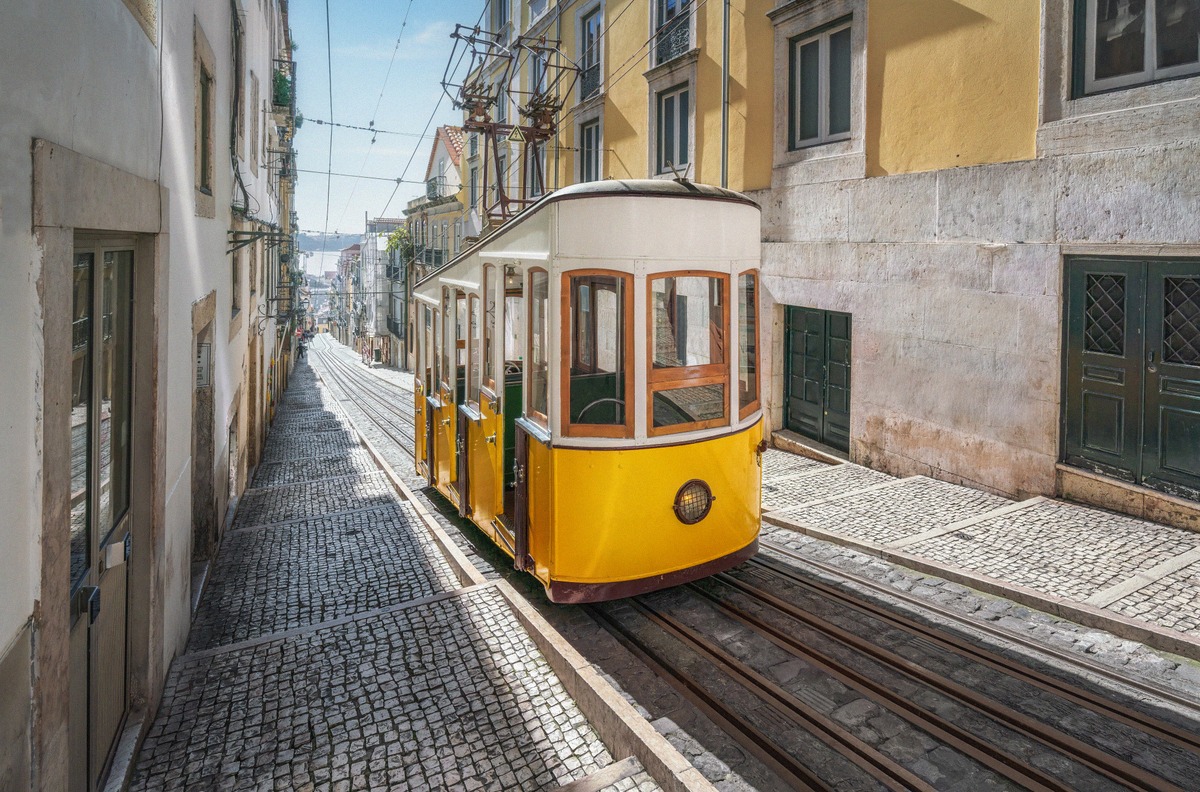
The yellow funicular from 1892 climbs one of Lisbon's steepest, most photogenic streets, a national monument between Bairro Alto and Cais do Sodré.